ASIO and Anduril: the small Israeli firm that flies drones without GPS
6 min read
On 20 July 2026, the Israeli business paper Calcalist (CTech edition) exclusively reported a deal between Anduril Industries — Palmer Luckey’s company, now one of the leading suppliers of drones and autonomous systems to Western defence — and ASIO Technologies, a small Israeli tactical-navigation firm that, until two days earlier, had never taken a single dollar of outside capital. In the same news cycle, ASIO announced the first funding round of its history: $15 million. Neither company published a joint statement: the deal — with its value “estimated” at tens of millions — was reported by a single newspaper. A textbook case of how, in partnerships like this, the announcement arrives first, and vaguer, than the substance.
Who ASIO Technologies is
Founded in 2003 in Kfar Saba, near Tel Aviv, by brothers Tomer Malchi (CEO) and Yaniv Malchi, ASIO spent more than twenty years self-funded and profitable — a rare exception among defence companies. It now has around 70 employees, an additional office in Miami Beach, and disclosed customers including every branch of the Israel Defense Forces, the US Department of Defense, US Special Operations Command (USSOCOM), and partners such as Elbit Systems and Israel Aerospace Industries. On 20 July it closed the first outside-capital round of its history — $15 million, led by Protego Ventures (an Israeli defence-focused fund founded by Lital Leshem and Lee Moser) alongside Aliya Capital Partners, a Miami family office managing roughly $6 billion. “ASIO has reached this stage without raising external capital while maintaining profitability,” Leshem said; Malchi added that the investment would help “accelerate innovation, expand globally, and continue delivering combat-proven operational capabilities that can be deployed at scale.”
The technology: navigating when GPS stops answering
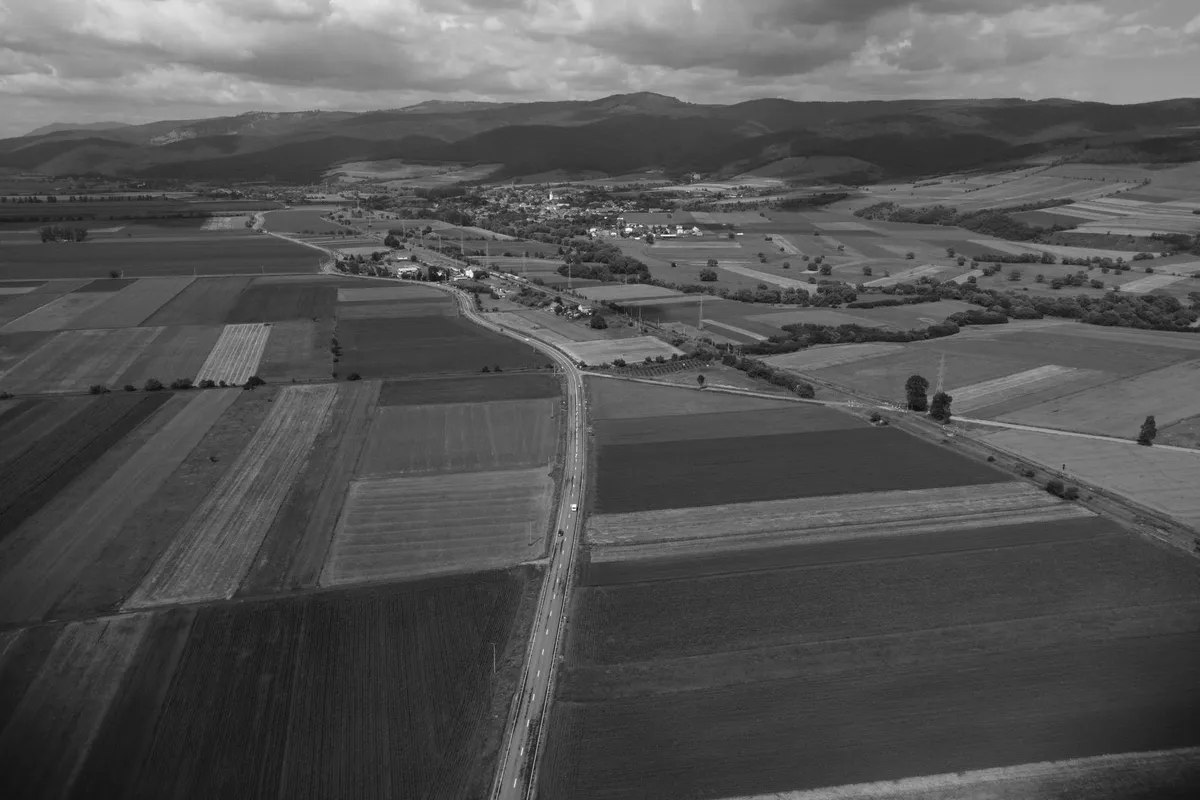
The product at the centre of the Anduril deal is NOCTA, a vision-based positioning system for aerial platforms: instead of relying on GPS satellites, the onboard camera compares real-time imagery of the terrain below with reference geospatial data, using proprietary technology the company calls GeoFusion. The problem is concrete: in today’s active theatres — Ukraine, the Middle East — GPS jamming and spoofing are now the norm, and a drone that loses satellite positioning with no fallback becomes an expensive, blind object. NOCTA is built for small platforms (Group 1 and 2, broadly under 25 kg), with a small footprint and low power draw, able to operate day and night and to integrate with sensors such as LiDAR. ASIO claims more than 10,000 real operational hours across varied terrain. A separate, earlier contract — awarded on 11 April 2026 by an unnamed “US prime contractor”, for several hundred NOCTA units for a UAV programme — had already been justified by Malchi on the grounds of ensuring drone functionality “when GNSS signals are compromised and communications are limited or unavailable.”
The limits are the ones typical of any vision-based navigation: it works as long as the terrain offers distinctive features to match against the reference map, while accuracy can degrade over open water, uniform desert or fresh snow. Thick fog, sandstorms or battlefield smoke still reduce usable visibility, even for a “day/night” system, and reliability depends on how current the preloaded geospatial data is, which terrain reshaped by the conflict itself can render outdated. Figures such as “drift-free” or “10,000+ operational hours” have not been independently verified: for now, they are the company’s own numbers.
The known terms of the deal: what the newspaper says, what nobody says
Here the gap between announcement and substance is wide. The value — “tens of millions of dollars” — is Calcalist’s estimate, not a figure confirmed by Anduril or ASIO. The stated purpose is that ASIO “will supply components for Anduril’s unmanned aerial vehicles”: it is not specified whether this actually means NOCTA — likely, given the company’s specialism, but unconfirmed — nor the quantities, the contract’s duration, or any exclusivity clauses. No official statement, on either Anduril’s or ASIO’s website, confirms the deal in the terms reported: unlike the Oligo Security–Palantir case, announced a month earlier with a joint statement from both parties. The timeline helps: Palmer Luckey met at least ten Israeli defence start-ups on private visits in February 2026, and by June Anduril had begun openly exploring an Israeli expansion. April’s contract with the unnamed “prime contractor” shows ASIO was already inside the American supply chain before this deal — but nothing proves it is the same customer.
What it means
For ASIO, the deal arrives just as the company gives up, for the first time in twenty years, its financial independence: from a self-funded supplier to one dependent on venture capital and on a partner-customer far larger than itself, with disproportionate bargaining power. With 70 employees and a $15 million round, it remains to be seen whether it has the production capacity for a contract “worth tens of millions” without rapid headcount growth. For Anduril, the move fits a broader strategy of building an ecosystem of small, specialised suppliers for the critical components of its autonomous systems — the same approach seen in the alliance with Rheinmetall on European drones, now scaled back a year after launch. For the market, the signal is a race for APNT technologies (Assured Positioning, Navigation and Timing): investment in Israeli defence tech reached nearly $3 billion in the first half of 2026, triple the whole of 2025. Europe and Italy have no equivalent supplier in this specific case: resilience to GPS jamming is an increasingly central requirement for anyone buying drones for defence, yet the supplier making headlines today is Israeli-American, not European. Anyone buying platforms with critical navigation components from a non-EU supplier should check the dual-use and compliance implications straight away: military navigation technology falls under export-control regimes, both Israeli and — when integrated on US platforms — American.
The operational lesson
- Do not mistake a press report for an official statement. Without a figure published by either company, “tens of millions” remains an estimate: useful for the order of magnitude, not for planning an investment on.
- If you are assessing an optical-navigation supplier, ask for independent test data on drift and accuracy under real conditions — not just the hours the company claims.
- If you are the emerging supplier, work out the share of revenue tied to the new large customer before signing: twenty years of independence made conditional on a single partner comes at a price in future autonomy.
- If you buy drones in Europe, map the critical components — including navigation — subject to non-EU export controls before closing a tender specification.
- Check whether an unnamed “prime contractor” in an earlier contract is the same partner behind the new announcement: growing companies often let continuity be implied that the public facts do not yet confirm.
Anyone assessing a critical-technology supplier should always separate the press estimate from the signed contract, the marketing figure from the independent test. It is the standard behind every architecture we build to remain verifiable, not just able to work on day one of the announcement.
Assessing a supplier presenting a deal “estimated at tens of millions” or a “drift-free” technology never tested by a third party? Let’s talk for thirty minutes: together we will separate what is already proven from what still needs proving.
Sources
- CTech (Calcalist) — Israeli defense tech firm ASIO lands Anduril deal worth tens of millions, raises $15 million (20 July 2026)
- The Jerusalem Post — ASIO Technologies funding round and Israeli defense-tech investment context (July 2026)
- The Defense Circuit — ASIO Secures Multi-Million-Dollar U.S. Contract for GPS-Independent UAV Navigation Systems (11 April 2026)