Operational notes
Operational notes.
Field guides on data, operational AI and compliance in critical sectors. No jargon, no promises.
-

Machinery with high-risk AI: the presumption of conformity is provisional
Since 27 July the Machinery Regulation’s presumption of conformity has covered high-risk AI too — but the AI Act standards it leans on are not in the Official Journal yet.
-

Medical devices: when the technical file and the paper leaflet actually expire
Regulation (EU) 2017/745 sets 2027 and 2028 for legacy devices; Regulation (EU) 2025/1234 extends electronic instructions for use.
-

Battery passport: what stays a trade secret from 18 February 2027
Regulation (EU) 2023/1542, Art. 77 and Annex XIII: the cell’s general chemistry is public, the detailed formulation is not. The line has to be drawn now.
-

Digital product passport: what you will have to make public (and how not to publish your secrets)
ESPR: the digital product passport makes technical data public, category by category. What to classify as a trade secret, and from when.
-

MiniCPM5-2B: Naming Eight Datasets Is Not Enough for the AI Act
OpenBMB’s frontmatter for MiniCPM5-2B names eight training datasets by name: we verified each one, and all eight exist and are public. But the AI Act exempts open source only from points (a) and (b) of Article 53: the copyright policy and the training-content summary remain owed regardless.
-

FrontierView to Oxford Economics: 28 AI Representations from the Seller, 4 from the Buyer
On 27 August 2026 FiscalNote sold FrontierView to Oxford Economics: in the Equity Purchase Agreement filed with the SEC, Section 3.19(o) makes the seller swear to an inventory of every AI Tool in its products and a right to each Training Dataset, “scraped or harvested datasets” included.
-
Legislative decree 134/2024: the list of critical entities cannot be read, by law
Legislative decree 134/2024 identifies critical entities through a list that article 8 excludes from access by law: an entity learns it is on it only through a private notice, which also starts the nine months for the risk assessment.
-

C3.ai and the Energy Department: a Contract Written on the Exact Edge of a Threshold
Contract 89303026CMA000138 is worth, including options, exactly $9 million — the ceiling for simplified federal acquisition procedures, raised from $7.5 million to $9 million forty days before signature. By July 2026 the Energy Department had handed back 87.5% of it.
-
NEWS-D: Italy’s drug early-warning regulation arrives 462 days late
DPCM 7 July 2026, no. 156 sets out the tasks and organisation of NEWS-D. The law gave ninety days; the regulation arrives 462 days after that, for a process in which the sample passes through six different hands and a threshold no laboratory holds on its own.
-

Google’s TimesFM 3.0: the card changes licence, the weights don’t
On 24 August 2026 Google uploaded TimesFM 3.0’s weights to Hugging Face under an Apache 2.0 licence declared on the card. Sixty-nine hours later, on the same bytes, the licence became non-commercial — and the official GitHub announcement landed a day later, after the swap was already done.
-

In OpenAI’s memorandum with California, stopping a release isn’t OpenAI’s call
On October 27, 2025, California granted a committee of OpenAI’s nonprofit board an approval right that can block a release by the operating company even past its own stated risk thresholds; after the July 2026 Hugging Face incident, fifteen other states are investigating under consumer-protection law, without that right written into any document of their own.
-

DORA’s ICT register: the deadline is fixed, the subcontracting chain is not
Commission Implementing Regulation (EU) 2024/2956 sets the templates for the register of information required by DORA Article 28(3). Banca d’Italia fixed the deadline at 15 March: the subcontracting layers behind each critical function still are not mapped.
-

El Paso: a $13 billion guarantee, and for Meta the deal is still an exclusivity agreement
In late July 2026, $12.3 billion of notes were launched backed by Meta’s guarantee on the future El Paso data center; on 30 July, in the 10-Q filed with the SEC, Meta describes the same deal as an exclusivity agreement still awaiting definitive documents by the third quarter of 2026.
-

Digital Preservation Manual: June’s Deadline Has Passed, AgID’s Check Hasn’t
Italy’s three-year ICT plan sets 2026 as the target for publishing a preservation manual and naming a preservation officer; AgID’s monitoring closes in December, while a working group has been rewriting the same rules since January to align them with eIDAS 2.
-

Tencent’s Hy4 Preview: the Reasoning Default Flips, Silently
Moving from Hy3 to Hy4 preview, Tencent flips the default of the reasoning_effort parameter in the chat template: from a direct answer to extended reasoning. The same quickstart code, with no error, now behaves differently — and a second field, missing from both model cards, can force it back.
-

Five bids at NASA, one source for the nuclear site
On 17 and 18 August 2026 two federal agencies modify contracts with Anduril Industries: a restricted competition with five bids at NASA, no competition at all for the nuclear-security anti-drone system.
-

Law 90/2024: the missing taxonomy, and who finally wrote it
For sixteen months, Italy’s law 90/2024 required public bodies to report incidents against a taxonomy that had, in the meantime, stopped existing. The gap was closed by a determination signed by the very Agency that receives the notifications.
-

DeepSeek-V4-Flash-Vision-Exp: Italian Costs 41% More Tokens
We tokenised the same GDPR article in Italian and in English with DeepSeek-V4-Flash-Vision-Exp’s own tokenizer, released 31 August 2026: 525 tokens against 373 — 41% more. Compared against two other open-weight models.
-

Self-service terminals: the exemption runs twenty years from entry into use, not from 2025
Legislative Decree 82/2022, transposing Directive (EU) 2019/882, has applied since 28 June 2025: for self-service terminals the transitional regime does not end in 2030 as it does for service contracts, but twenty years after each unit’s entry into use — a date no register cross-checks against its conformity file.
-
General Dynamics: 1,010,925 unregistered shares, and a plan missing from the rescission offer
On 4 August 2026 General Dynamics files with the SEC a rescission offer covering up to 1,010,925 shares acquired without proper registration through two 401(k) plans between 1 July 2025 and 30 June 2026: it expires on 8 September. The 10-Q filed six days earlier cited “approximately 300,000” shares across three plans — the third, and a fourth never previously named, are missing from the offer, with no explanation given.
-
GLM-5.3: sixteen benchmarks, zero on safety
On 28 August 2026 Z.ai published the weights of GLM-5.3: the card lists sixteen coding and cyber benchmarks, none for safety or for languages beyond English and Chinese.
-

CBAM: the 50-tonne threshold is cumulative, and crossing it makes the whole year answerable
Regulation (EU) 2023/956, as amended by Regulation (EU) 2025/2083: below 50 net tonnes a year the importer is exempt, above it every emission for the whole year becomes reportable.
-
Symbotic: the single customer climbs to 90.5%, the accounting lawsuit does not close
The 5 August 2026 10-Q: an unnamed customer accounts for 90.5% of quarterly revenue, up from 83.8% a year earlier — while a federal judge lets most of a lawsuit over those same accounts move forward, and the company answers the amended complaint on 28 August.
-

The Ex-Employee’s File: No Retention Term in the GDPR, Several Elsewhere
Article 5(1)(e) GDPR requires storage limitation without naming a number: the actual term sits elsewhere, written piece by piece across tax law, workplace-safety law and employment law — each with its own horizon.
-

L3Harris: the chief executive leaves, the bill drops from $38.7 million to zero
On 16 August 2026 Christopher Kubasik’s tenure ends after a board inquiry into conduct under the Code of Conduct: the separation agreement filed the next day wipes out severance and unvested awards, against the $38.7 million the April proxy statement estimated for a termination without cause.
-
Partly completed machinery: assembly instructions, not a user manual
Regulation (EU) 2023/1230 requires the supplier of partly completed machinery to provide assembly instructions, not a user manual, and a declaration of incorporation, not of conformity.
-

Nemotron 3 Diarization: an evaluation licence, not an open model
NVIDIA releases a speaker diarisation model under an evaluation-only licence: the governance documentation sits behind the same gate as the weights, and every derivative is licensed back to NVIDIA.
-

Flood hazard maps: two notices nine days apart, two opposite effective-date rules
Two notices from the same river basin authority, five municipalities, nine days apart: the same flood hazard change takes effect on the day of publication in one case, seven months earlier in the other.
-
Volato-Alignment Engine: the agreement is filed, the numbers are not
The August 28, 2026 8-K: the merger agreement between Volato Group and Alignment Engine is filed in full, but the $500 million valuation and the Ohio campus megawatts appear only in the press release, furnished under Item 7.01.
-

The harmonised standard on the manual has existed since 2020: almost no one cites it
EN ISO 20607:2019 gives presumption of conformity for machinery manuals, row 94 of the EU Official Journal list. IEC/IEEE 82079-1:2019, the standard everyone cites, is not harmonised: zero hits, verified.
-
Machinery Regulation: when a retrofit makes you the manufacturer, and when it doesn’t
Regulation (EU) 2023/1230, Articles 3 and 18, applies from 20 January 2027: two conditions, not one, decide whether modifying an installed machine makes you its manufacturer.
-

Machinery Regulation: in Italy the language of the manual is still unset
Legislative Decree 17/2010 has not been updated since 2012, the delegation under Law 36/2026 expires on 9 October 2026, and Italy’s workplace-safety code still points to a rule repealed in 2010: three facts verified on Normattiva.
-

Machinery Regulation: change one thing, three answers and seven silences
What gets updated when the software changes, a harmonised standard is revised, or a machine reaches a new market: Regulation (EU) 2023/1230 answers explicitly three times, and stays silent on at least seven cases.
-

CVCN: the rule says what to hand over, is silent on who sees it next
Presidential decree 54/2021 on Italy’s cyber perimeter requires an ICT supplier to hand the CVCN its architecture, security functions and a representative test environment. On who sees them afterwards, the text says nothing.
-

The Memo Was Supposed to Prove Sabotage. It Proved Retaliation.
The docket records the Anthropic-Pentagon case as terminated on 27 August 2026. The order is not public yet, but the memo meant to justify the designation has been since March: read in full, it talks mostly about the press.
-

Qwen3.8-Flash-Next: 6 billion active, 180 to load, 51 sitting in a table
Alibaba publishes on Hugging Face a preview of the Qwen4 architecture: 360 GB of weights, one-thirtieth active per token. What the card states, what it does not.
-

Strategic plants: the landfill guarantee turns annual, compliance must be proven day by day
Decree-Law 154/2026 rewrites Article 208(11)(g) of Italy’s Environmental Code: an annual guarantee on multi-year permits, for companies under extraordinary administration running strategic plants.
-

Mercury’s 8-K on Palantir has arrived: item 2.02, not item 1.01
The follow-up to our 6 August piece: Mercury Systems’ 8-K on quarterly results, filed 18 August 2026, names Palantir only in one bullet point of a slide the issuer itself states it does not want treated as “filed.”
-

Copy of the Employee File: Trade Secrets Do Not Justify a Blanket Refusal
GDPR Article 15, Recital 63 and the Court of Justice ruling in C-487/21: an employee’s file never sits in one system, and trade secrets do not let a company withhold it wholesale.
-

Karman-Walker: the loan is filed in full, the sale contract is not
The 28 August 2026 8-K: the sixth amendment to the credit agreement is attached in full, while the Share Purchase Agreement that bought a Scottish supplier of missile-seeker components appears in no other Karman filing.
-

Granite 4.2 from IBM: fully dense, the declared 512K context stops at 128K in the engine
IBM releases Granite 4.2, three dense Apache 2.0 models built for enterprise agents: no sparse parameters, but the 512K context trained into the base model never reaches the config that serves it.
-

Medicines: the central database has a decree, and a 24-hour clock
The 16 June 2026 decree rebuilds Italy’s central medicines database, now at the Ministry of Health: manufacturers, depositors and wholesalers report within 24 hours.
-

Eleven years of waiting times in Emilia-Romagna: the 2021 step never closed
We rebuilt 499 weeks of waiting times from the Region’s public data: the share within the standard falls from 98% to 88% between 2018 and 2021 and never recovers, while volume stays flat.
-

The Pentagon never explained why DJI “contributes” to China’s defense industry
On 14 August 2026 the D.C. Circuit reopens the DJI case: the district court had upheld the Pentagon’s claim by citing reasons the Pentagon itself never put in writing. The paragraph meant to explain DJI’s contribution to China’s defense industrial base is redacted in full, save for its heading.
-

Catastrophe cover premiums must be proportional to risk. Who checks?
Italian law obliges companies to insure against earthquakes, floods and landslides, and the regulation requires premiums proportional to risk, computed on public hazard maps. We put online the part you can check yourself.
-

Classified contracts: the exemption is from the tender, not from oversight
Article 139 of Italy’s Public Contracts Code exempts classified contracts from the tender, not from oversight: two reasoned orders, the clearance, the Court of Auditors.
-

Flood risk at the end of summer and in autumn: what climate change actually tells us
ISPRA measures, the IPCC projects using calibrated language: what is established about autumn flood risk, and which mapping cycle your site is pegged to.
-

Palladyne AI and IAI: the loitering-munitions exclusive is still a memorandum
The 8-K of 8 June 2026: Palladyne AI and IAI (owned by the State of Israel) sign a memorandum, not a contract, over the Harpy loitering munitions in the US.
-

Legislative Decree 51/2018: what an AI system’s log must say when the police use it
The decree implementing Directive (EU) 2016/680 replaces the GDPR for judicial policing. Article 21 requires logging the reasons, date and time of every operation; Article 4 requires separating facts from evaluations before any transmission.
-

Fingerprint, Face, Iris: The Proof Your Reader’s Vendor Never Handed Over
A biometric reader in the workplace processes data that Italy’s Privacy Code, art. 2-septies, and GDPR art. 9 subject to a double filter. The Tropea case, verified against the source.
-
The company that lost the FAA’s SMART contract still got an order with its name
On 23 June 2026 the FAA awarded Air Space Intelligence the $875,950,000 SMART contract; on 13 August a non-competed $500,000 order under the same name went to Palantir, which had lost the competition.
-
GLM-5.3-Flash from Z.ai: MIT licence, 328 GB of weights, you build the rest
Z.ai releases GLM-5.3-Flash as open weights under an MIT licence: 320 billion parameters, 328 GB on disk. We verify the licence, the real weight and what the weights leave out.
-

Voucher Cloud & Cybersecurity: the window opens 10 November, the “starting point” stays scattered across six systems
The 4 August 2026 directorial decree opens the Voucher Cloud & Cybersecurity window (€150 million, from 10 November 2026): proof of the “starting point” it demands stays scattered across six systems.
-
Ursa Major goes to Nasdaq: the contract is filed, the projections are not
The 25 August 2026 8-K: the Business Combination Agreement is filed, the $2.3 billion valuation rests on furnished projections — and Exhibit 99.3, the one with the numbers, is not in the filing.
-

Whistleblowing: a reporter’s confidentiality is a sanctioned duty, and the proof sits in six places
Italy’s Legislative Decree 24/2023: a whistleblower’s confidentiality is not a promise, it’s a duty ANAC can fine. The thresholds, the moving deadline, the six places holding the proof.
-

Range Impact and Vetted Portal: the contract is filed, the liability is not
The 17 August 2026 8-K: Vetted Consultant will build Range Impact a custom AI agent for permit compliance — $626,000, a clause shifting onto the client every decision made on third-party models, and a warrant on 500,000 shares tying the supplier to its own client.
-

Thomson-1.0-Small from Thomson Reuters: 3 billion active parameters, 35 you still have to keep in memory
Thomson Reuters releases open weights for legal, tax and journalism work: 35 billion parameters, non-commercial licence, no minimum hardware declared.
-

GPSR, general product safety: obligations already in force, the file stays scattered across six systems
Regulation (EU) 2023/988 (GPSR) has applied since 13 December 2024, updated from 29 May 2026. The file it requires stays scattered across six company systems.
-

Tencent’s EVIE-Preview-4.5B: the model weighs 8.5 GB. Indexing your documents doesn’t
Tencent releases EVIE-Preview-4.5B, a visual retrieval model for scanned documents, first on the ViDoRe boards it reports itself. The real cost is the index, not the GPU.
-

End-of-life vehicles: EU Regulation 2026/1738 and circularity data scattered across six systems
Regulation (EU) 2026/1738 on end-of-life vehicles: in force from 13 August 2026, general application from 2028. Circularity data stays spread across six systems.
-
NVIDIA guarantees $105 billion for OpenAI’s lease in Pike County, and the tenant stays unnamed
NVIDIA’s Form 8-K of 17 August 2026: a guarantee of up to $105 billion for SB Energy’s Ohio campus. The tenant, an OpenAI affiliate, is never named in the filed text.
-

S1-mini: the declared licence has the file, and the link works
S1-mini by Superwhisper, 0.6B parameters: Apache 2.0 licence, LICENSE file present, link verified HTTP 200 — against three preceding cases without that file.
-

Medicines: the old seal ends on 9 February 2027, the batch stays scattered across six systems
Italian Legislative Decree 10/2025 transposes EU Regulation 2016/161: the stabilisation period ends on 8 February 2027. Batch data sits in six systems.
-

Ornith-1.5-397B: licence declared, the file still missing for the third time in three days
Ornith-1.5-397B, 397 billion parameters: MIT licence declared, no LICENSE file in the repository. Verified on 21 August: the third case in three days.
-

CSDDD: the threshold rises to 5,000 employees, the supplier data stays scattered
CSDDD, Directive (EU) 2024/1760: threshold at 5,000 employees, application from 26 July 2029. The data on chain-of-activities suppliers stays scattered.
-

Helsing reaches Japan via Rakuten: a point of contact, not a contract
Reuters, Nikkei and Jiji confirm Rakuten's role for Helsing's HX-2 drone in Japan on 17 August. No filed agreement, no joint press release.
-

Why a single bear sighting is not enough: the case for each animal’s history over time
Trento’s Province warns: a point on a map does not say where the bear is now. We restate our method — systematic scanning and a history for each individual.
-

UI-Mate-27B: the open-weight agent that clicks for you. With what permissions?
Tencent’s UI-Mate-27B, open weights on Hugging Face, clicks and types on screen: licence, gating, context and permissions verified on 20 August.
-

Battery passport: mandatory from 18 February 2027, and the key data point sits outside the company
Regulation (EU) 2023/1542, Art. 77: the battery passport applies from 18 February 2027. Composition, critical supply chain and real-world use: the data sits in six systems.
-

Ling-3.0-tiny: MIT licence declared in the tags, no licence file in the weights repository
Ling-3.0-tiny (Ant Group): 7.9 billion parameters, built to run on a Mac mini. Verified ourselves: MIT licence in the tags, no LICENSE file in the repository.
-

EU Packaging Regulation 2025/40: applicable from 12 August, the data sits in five different systems
Regulation (EU) 2025/40, Article 71: applies from 12 August 2026. Composition, weight, recycled content, volumes by Member State: never in one system.
-

IonQ and Anduril: a memorandum, not a contract
The 8-K filed on 5 August 2026: IonQ discloses a memorandum with Anduril on quantum technologies for defence, with no Item 1.01 and no dedicated release. What is missing.
-

Against drones, DHS writes two lists. Anduril makes only one
DHS awards $1.5 billion against hostile drones across two tracks: owned hardware or a managed service. Anduril wins only the second, and protests to the GAO.
-

NOSI: an Italian company’s industrial security clearance is six documents, not a stamp
Italy’s DPCM 5/2015: what a company must prove for its industrial security clearance — personnel clearances, secure area, beneficial owners, anti-mafia checks.
-

Open licence, closed access: a Hugging Face model in Apache 2.0 behind a login
A Hugging Face repository declares an Apache 2.0 licence, yet downloading a file returns HTTP 401 without authentication: the licence is not the access channel.
-

The question is not whether you hold a BTI: it is whether the goods still correspond to it
Regulation (EU) 952/2013, Article 33: a BTI holder must prove the goods still correspond — scattered across production, purchasing, logistics and customs.
-

The question is not whether you declare deforestation-free: it is which plot your batch came from
Regulation (EU) 2023/1115, Article 9: the due diligence statement requires geolocation of every plot of land. The data sits scattered across five systems.
-

NextNav and Safran: the partnership was announced, the contract was not
The 11 August 2026 Form 8-K: NextNav names Safran as a partner for backing up GPS, but no Item 1.01 records a contract. What is missing.
-
NVIDIA-Nemotron-Labs-Teacher-Chat: 550 billion parameters to train a smaller model
NVIDIA releases a 550-billion-parameter model built to train a smaller one: the licence, the minimum hardware, and the missing safety subcards.
-

RENTRI: the register is not enough, you need proof the waste arrived
RENTRI, Decree 59/2023: who must register, the deadlines already passed, and manifest penalties from 15 September 2026 — where the missing data sits.
-

Qwen3.8-2.4T-A95B: above fifty million dollars a separate licence is required, not for internal use
The Qwen3.8-2.4T-A95B model on Hugging Face: the weights’ licence requires a separate licence above $50 million in revenue, but exempts internal use.
-

DeepSeek-V4-Pro-0813: MIT licence, weights included, no usage policy in the repository
Checked file by file: the DeepSeek-V4-Pro-0813 repository on Hugging Face carries only the MIT licence, names the weights, no second restrictive document.
-

Starlab is a joint venture, and Voyager controls 61.9% of it
The 14 August 2026 Form 8-K: Voyager merges two segments and confirms its 61.9% stake in the Starlab joint venture, with Airbus, Mitsubishi and Palantir.
-

Probabilistic analysis and Article 158: the GDPR rights that stay limited
Legislative Decree 141/2026, Article 158: Italy’s tax agency isolates unknown tax risks with AI; paragraph 4 defers GDPR rights limitations to a Treasury regulation.
-

A multi-year partnership announced, and no agreement filed
Quantinuum's 8-K of 11 August 2026 announces a multi-year partnership with Oracle under Item 7.01: no Item 1.01, no agreement and no figures filed.
-

Apache 2.0, and a second file that rules out defence and health
Muse Glimmer-30B: a genuine Apache 2.0 licence, a verified publisher. But a second file, USAGE_POLICY.md, rules out defence, infrastructure and health.
-

A penetration test is a “managed security service”. Now what?
Regulation (EU) 2025/37 counts penetration testing, security audits and consulting as managed security services. Italy’s side has not arrived yet.
-

The inspection data on your network has changed owner
The 10 August Form 8-K: Ondas buys Cyberhawk for $118.2m and folds drone inspections into its Palantir Foundry. Did your contract see this coming?
-

A licence paid in shares: the platform supplier owns 7.4% of its customer
On 10 August 2026 Surf Air Mobility announces the Palantir partnership; the 10-Q filed the same day shows the licence paid in shares, and a July 13G shows the 7.4% stake.
-

The inspection does not ask whether you comply: it asks for the data that proves it
On 11 August 2026 ACN published the MVE FAQs on NIS supervision: Article 37(2) of the decree asks for the data proving implementation, not a signed policy.
-

Five vehicles named after Anduril, and Anduril signs none of them
On 11 August 2026 a Form D/A registers the fifth fund series named after Anduril: manager in Boca Raton, $11.4m raised, Anduril never a signatory.
-

Derivatives of a model barred in Europe carry different licences
On Hugging Face, MiniMax H3 derivatives declare Apache 2.0, “unknown” or nothing. The weights licence excludes the European Union and forbids changing its terms.
-

Not the satire: the supervisor challenges how the notice was designed
A journalist’s deepfake in a satirical show: the Italian supervisor finds a breach of GDPR arts. 5 and 25. Not for the content — for the marking.
-
No defined exit strategy: the audit line that concerns you
An internal WFP audit, seen by FRANCE 24 and PassBlue, reveals no exit strategy from Palantir: the question that concerns every critical supplier.
-

The press release says antitrust, the filing says national security
Archer buys Wisk, SkyGrid and Insitu from Boeing: the release cites antitrust, the Form 8-K adds national security and a deadline five months later.
-

Chapter IV has applied since June, the Italian authority has not
Chapter IV of the Cyber Resilience Act applies since 11 June 2026. Italy has yet to designate the notifying authority; the delegation expires 9 October.
-

Two million for a “proprietary solution”, and nothing else
A $2m ICE purchase order says only “proprietary solution”. The registry doesn’t say what it does — the same gap sits in half of supplier registers.
-

Maple-Preview says 5.31 GB. The repository weighs 40.43
A 20B-A1B ternary model under MIT, published on 4 August: the card promises 5.31 GB, the weight index declares 40.43. What you actually download.
-

The Pentagon’s War Data Platform: what it buys is the integration
The CDAO awards Accenture Federal Services the War Data Platform Core Integration. In the federal record the order is signed on 25 June, $102,250 obligated.
-
The list names the directors, not the companies they run
On 7 August the EU adds five people to Annex I of Reg. 269/2014. The companies — drone software, GNSS receivers, gyroscopes — appear only in the reasons.
-

ZeroTier and Carahsoft: what is signed is a route to market
ZeroTier Quantum reaches US government buyers through Carahsoft and the NASA SEWP V contract. That is distribution, not accreditation — the difference matters.
-

Trade-secret injunctions: a window closes on 11 August
Law 145/2026 confirms the rewriting of article 132 of the Industrial Property Code. For measures already in force the forfeiture term is sixty days.
-

Finding the bear before the collar: an aerial scanning proposal with drones and AI models
In Val di Sole, genetic identification of the bear behind recent damage is under way, ahead of a radio collar: what systematic aerial scanning could do.
-
LFM2.5 from Liquid AI: above ten million dollars, the licence is not granted
LFM2.5, Liquid AI’s edge model on Hugging Face: the LFM Open v1.0 licence denies commercial use once the group’s annual revenue passes 10 million dollars.
-
No space authorisation until 31 December: the 100-million insurance requirement stays
Decree-Law 144/2026 suspends authorisation under Italy’s space law 89/2025 until 31 December. The 100-million insurance and third-party liability remain.
-

FTEP: private experts inside the State Department, on the company payroll
The State Department launches FTEP, with Palantir and Anduril among the partners: participants stay employed by the companies that send them.
-

Volta and Bitdeer in Norway: the announced figure and the filed one
Volta launches with a $10bn partnership with an AI lab it does not name. At the SEC, Bitdeer files a 16-year, $4.7bn lease for the same site.
-

Eurodac: the databases are interconnected, the data rules come later
Law 145/2026: article 13 interconnects Italy’s biometric databases and opens the national Eurodac access point. The decrees are due by 9 December 2026.
-

MiniMax H3: the weights are out, the licence excludes the European Union
MiniMax H3's weights have been online since 6 August 2026. The licence attached to them excludes the EU, the UK, South Korea and the US from authorised use.
-
From 10 August the European Commission has its AI-model procedure: who sees your file
Commission Implementing Regulation (EU) 2026/1755, in force Monday: trade secrets, file access, limitation periods. Italian decrees not yet in the Gazette.
-

When the tender document already names the product: the Anduril Pulsar-L case on the Marines’ ACV
On 3 August the Marines publish a sole-source notice for the ACV’s C-sUAS: the requirement document already names Anduril. What the mechanism shows.
-

KODE Labs and Palantir FedStart: the FedRAMP High Authorization Belongs to Someone Else
KODE Labs announces FedRAMP High "through Palantir FedStart". The regulator's register says: the authorisation is Palantir's, KODE is named inside its perimeter.
-
Enriched contact databases: the Lusha fine is a lesson for buyers, not just the seller
Italy's Garante fines Lusha 2 million euro for unlawful processing. The real exposure sits with whoever buys enriched contact data into a CRM.
-

FCC 26-50: the covered list reaches components, and a court narrows it
FCC 26-50 bars logic-bearing hardware components from equipment authorisation and, after a court ruling, narrows the definition of critical infrastructure. What changes for anyone buying certified hardware.
-

Shieldstral 1.0 3B: the safety policy is a sentence you write, not a clause
Mistral releases Shieldstral, an open-weight Apache 2.0 safety classifier: the policy is written in natural language, not buried in a clause.
-

AI decrees pass final review: automated dismissal is void, CV screening is not
Council of Ministers, final review: dismissal is void if based solely on automation, CV screening excluded from the ban. Oversight, penalties, no Gazette text yet.
-
Palantir will build Mercury Systems’ digital twin: whose ontology is it?
On 3 August Mercury Systems handed Palantir the job of building the ontology — the digital twin — of its own operations. No 8-K on EDGAR. The questions to ask first.
-
Core Scientific and AMD: in the 2.5 GW deal, the word that matters is “potential”
On 28 July Core Scientific and AMD announced a partnership covering up to 2.5 GW of capacity: only 437 MW is billed today. What is signed, and what is only promised.
-

RESTREINT UE: the facility clearance is not required, the accredited system is
The Commission’s 2015/444 decision: in EU defence programmes, at RESTREINT UE the FSC is not needed, but the contractor’s information system must be accredited.
-
ChainDrop: the npm worm that survives removal by rewriting VS Code and Claude Code configuration
ACN bulletin on ChainDrop: over 400 compromised npm packages, a preinstall script running before the decision, persistence in developer tool configuration.
-

The most-downloaded "Qwen3.8" repository on Hugging Face declares neither licence nor origin
Two repositories from the same author, both called "Qwen3.8", uploaded four days before Qwen's own announcement: the one with no licence has 155 times the downloads of the other.
-

A piece of AI Act enforcement news, and the two checks that don't confirm it
A story about fourteen financial institutions and the AI Act is circulating online: two independent checks, run by us on 5 August, don't confirm it.
-

Two data centres declared "of national strategic interest" worth €6.8 billion: who controls them, and under which jurisdiction
Italy's Cabinet declares two data centres worth €6.8bn strategic: the lead firms are from Singapore and the United States. Sovereignty is jurisdiction, not an address.
-

Data Act: a trade secret protects only what you have already mapped
From 12 September 2026 connected products are born with data accessible by default: trade secrets are protected in three steps under art. 4, not on request.
-

US defence AI contracts: the clauses that stay secret even from a senator
Senator Warren asks DoD and seven AI vendors for the text of contracts covering classified networks: it remains secret. Questions worth putting in your own specification.
-

Qwen3.8-Max announces open weights: the word "licence" never appears
Qwen3.8-Max: open weights announced for "next week", but across 5,068 words the word licence never appears once. What to check before adopting it.
-

Does a human check always find the hidden data in a file?
The UK Defence report on the Afghan data breach admits it: a second human check probably would not have found the hidden data in a spreadsheet.
-
Regulation (EU) 2026/1755: what the Commission can demand from your AI model provider
Commission Implementing Regulation (EU) 2026/1755, in force 10 August 2026: the procedure that lets the Commission request model weights, infrastructure and logs, and order a model disabled. What a buyer should hold in the contract.
-

Saab and Airbus choose the same startup: what is signed, and what is only announced
On 17 June Saab took a stake in Comand AI; on 18 June Airbus said it would integrate the Prevail platform. The memorandum surfaces only in a photo caption.
-

NIS2, 12 October 2026: the deadline is a document, not a date
12 October 2026 appears in no ACN determination on NIS2: the deadline is 18 months from the notice received, and it differs for every entity.
-

Could the border checks with Spain have been seen coming?
On 1 August Italy reinstated border checks with Spain. The Schengen register already showed it: how to turn that into an operational attention threshold.
-

1,049 customers, 42% of revenue from the US government: how a customer is really counted
Palantir's 10-Q, 4 August 2026: 1,049 customers, and 42% of revenue from US government customers alone. The lesson for buyers: how a customer is counted.
-

"The customer's edge should never become training data": true, but not because of the contract clause
Karp writes it to the SEC in Palantir's Q2 2026 filing: a customer's edge should never become training data. The popular version is wrong — here is the one that holds.
-

What is an "abliterated" model? The refusal is stripped from the weights, not the prompt
Thousands of "abliterated" derivatives of Gemma, Qwen and DeepSeek circulate on Hugging Face with refusal removed from the weights. Why it matters if you install them.
-

Facial-recognition decree: what to check once the text is out
The Cabinet meeting expected on 4 August has not happened yet. Four checks on the facial-recognition decree text for anyone running a surveillance system.
-

The EU’s list of AI sandboxes was due yesterday. We could not find it
Since 2 August the AI Office must publish the EU list of sandboxes (AI Act, Article 57(15)). We searched primary sources and official pages: not found.
-

American Rheinmetall and Harbinger: the US Army’s autonomous logistics effort has more than one supplier
Rheinmetall and Harbinger sign 18 months on Project Sustainment: no public value, and four other companies are running the same US Army programme.
-

Defensive monitoring of staff email: the Piaggio case and its €460,000 fine
The Garante fines Piaggio €460,000: emails gathered up to two years before any suspicion arose. Where lawful defensive checks on staff email end.
-

Scale AI Gets a New Chief Executive: the Press Calls Him Just an Ex-Google Cloud Man
Scale AI appoints Francis deSouza chief executive from 10 August: the announcement itself shows a longer track record than the press headlines suggest.
-

Is GLM-5.2 safe? The US government tested it as an agent, not a chatbot
On 17 July 2026 CAISI (NIST) published its assessment of GLM-5.2: it refuses attacks in chat, but not when carried out by an agent with tools in hand.
-

Police facial recognition in Italy: which use will need a judge’s authorisation?
Italy’s decree has three authorisation channels, not one: a prosecutor, an investigating judge, or neither. The amendment announced by Mantovano does not say which one it touches.
-

The AI agent picked the vulnerability and attempted the exploit on its own. The successful breaches were manual
Unit 42 documents a Chinese-speaking actor who used DeepSeek, commanded via Telegram, to enumerate targets with FOFA and attempt exploits with no operator. The autonomous run breached nothing: “the margin of failure was narrow”.
-

Who protects Helsing’s European combat drone — and who owns the protector
HENSOLDT supplies the CAIRAS system for Helsing's CA-1 Europa: three units, no public price. Who really owns HENSOLDT, verified against the filings.
-
ICT census of Italy’s public bodies by 30 September 2026: AgID set the date, not the law
Article 33-septies(1-ter) of Decree-Law 179/2012 requires an ICT census of public bodies "every three years": AgID, not the law, set 30 September 2026.
-

Every Member State was due an AI sandbox by today. The AI Act deadline has slipped to 2027
By 2 August 2026 every EU state was to have an operational AI sandbox. The Omnibus moved it to 2027. Italy, we checked, does not even have the decree yet.
-

MiniMax H3 and “open weight”: what was announced, what was online
At the H3 announcement the weights were not online and the licence was reported as different from M2, with the Disney suit over its predecessor open.
-

Article 50 of the AI Act: what to do on Monday 3 August if you are not ready
Article 50 of the AI Act applies from Sunday. Monday 3 August is the first working day: what to fix now, what is too late, what to ask your supplier in writing.
-

The suspended spyware is back in service: in between, the vendor changed owner
Suspended in 2024 pending a review that was never concluded, the ICE-Graphite contract went active again in 2025. In the meantime Paragon Solutions passed to an American owner: the Senate now wants answers.
-

The system administrator of your company’s AI: is the 2008 measure still in force?
Whoever holds the credentials to the AI server reads the company’s most sensitive files. Verified against the source: what survives, in 2026, of the Garante’s 2008 measure.
-

AI capacity doubled and 40% more controllers: Singapore puts both in the same plan
Singapore’s CAAS unveils a S$4bn plan: Thales’s AI doubles air traffic capacity, and the controller workforce grows by 40%.
-

EU code on AI content marking: the signatory list is out — is your supplier on it?
On 31 July the Commission published the signatories of the EU code on marking AI content: 83 in Section 1, 152 in Section 2. What to ask your supplier.
-

Distilling a model you cannot export: what it means if you expose an API
Reuters reviewed more than 80 Chinese documents on the distillation of OpenAI and Anthropic models. Why a contract clause is not a technical control.
-

276 billion parameters, 12 active: what it actually takes to run in-house
Thinking Machines publishes Inkling-Small under Apache 2.0: the measured bytes in the repository, total versus active parameters, what to put in the tender.
-

Array Labs and Mitsubishi Electric: the Asian channel is there, the exclusivity is not
On 28 July Array Labs closed a $21m round anchored by Mitsubishi Electric: the satellite radar technology, the known terms, and who sells it in Asia.
-

NIS categorisation: the one duty you judge, not fill in
Italy’s NIS decree requires a yearly categorised list of activities: the ACN rules, the judgement demanded, its ties to cloud and the cyber perimeter.
-

$500,000 for an image no one ever shared: xAI takes Minnesota to court
xAI is suing Minnesota over its anti-“nudification” law: up to $500,000 per violation, even without distribution. The lesson for AI buyers.
-

Recursive and AWS: $410 million in cash still doesn’t buy independence from a supplier
On 28 July, Richard Socher’s startup bought $410 million of AWS compute, all in cash, no equity. Why that doesn’t remove the lock-in risk.
-
Who can actually read the data? The DPIA said one thing, the permissions said another
The UK National Data Guardian: the impact assessment did not describe who accesses patient data. What the GDPR requires of anyone buying software.
-

Italy’s AI Act implementing decree needs redrafting: what the Garante asked for
Opinions no. 531 and no. 532 of 14 July 2026, made public on the 29th: favourable, with conditions, on the two draft decrees implementing the AI Act in Italy.
-
Leonardo DRS buys Raft for $450 million: who controls the mission software
Leonardo DRS is acquiring Raft for $450 million in cash. The proxy agreement with the US defence department decides who may use that software, and who may not.
-

AI assistant logs: how long to keep them, and who gets to read them
The prompt register holds know-how and tracks people’s work. Article 4 of the Workers’ Statute, article 114 of the Privacy Code and the Garante’s two terms.
-

A model that sees and runs on a phone: 460 million parameters, Apache 2.0 licence
Tether Data has released VisionPsy-Nano as open weights for on-device use. What the declared numbers mean, how to read them, and the limits written on the card.
-

The Kimi K3 licence: what does it actually stop you doing?
Moonshot has published the Kimi K3 licence text. Who must sign a separate agreement, who owes nothing, and the line procurement should read first.
-

AI Act Article 50 guidelines, C(2026) 5054 final: who is in scope, and from when
The Commission guidelines C(2026) 5054 final on Article 50 of the AI Act, applicable from 2 August 2026: the transparency duty does not depend on when you bought the system.
-

Who answers for the benefit figures you publish?
The UK statistics regulator did not write to the supplier, but to the body that had published the figures. What that changes in AI procurement specifications.
-

Bull and Kalray: in AI infrastructure the choice that binds you most is the network
On 28 July Bull and Kalray announced Ultra Ethernet-compatible interconnects. Why the network fabric is the least visible lock-in in a data hall.
-

Tracking pixels in email: what you need in place by 29 October 2026
Six months from the Official Gazette of 29 April: the deadline is 29 October 2026, not the 21st. What the Italian regulator asks of anyone tracking opens.
-
What must a model’s technical report tell you before you install it?
On 27 July the Kimi K3 weights arrived with a 47-page technical report. What that document actually declares, what it leaves out and why you need it.
-
AI for legality: what it takes for an automated analysis to hold up
On 27 July 2026 Anac, the Interior Ministry, the CNR and the Marche Region signed an AI protocol. What is already running and what is merely announced.
-

Why shared Claude conversations ended up in Google’s search results
On 27 July Claude’s public links surfaced on Google and Bing. The verified technical cause, and why an “unguessable” address is not a control.
-

IHI and Kuva Space: what has actually been signed, and who is “sovereign” over the sensor
On 21 July IHI and Kuva Space signed a memorandum of understanding on hyperspectral satellites in Japan. What binds, and what is only intent.
-

What does it really take to let an AI system handle classified information?
Classification attaches to the individual parts, not to the document: what an AI system must be able to prove before it works on classified material.
-

Open Secure AI Alliance: what is a supplier’s membership actually worth?
NVIDIA launches an open defence stack for agents with 37 partners. With no admission criteria and no verification, membership is not a contract clause.
-
If the rules on open models change, what happens to the one you have already installed?
On 24 July, 25 companies signed a letter against “premature restrictions” on open weights. What happens to the model already running in your infrastructure.
-
Data centres in Italy: announced capacity is not available capacity
Eight billion euros of data centres declared strategic in Lombardy and Piedmont: what really decides whether that computing capacity will be yours to buy.
-

Intel and SambaNova: what you are really buying with an inference accelerator
Not a foundry contract, not an acquisition. What the Intel and SambaNova documents actually say, and what buyers of dedicated AI hardware are betting on.
-
AI on staff: an Italian rule already requires you to explain how it works
Article 1-bis of Legislative Decree 152/1997 makes you disclose to workers and unions the logic, data and parameters of automated systems. Text and penalties.
-

How you measure whether a system actually worked
An independent analysis of hospital discharge delays in England and the statistics regulator’s intervention: baseline, measured outcome, and what counts as proof.
-

Open-weight model licences: what do they actually let you do?
Laguna S 2.1 ships with its OpenMDW-1.1 licence already written. How to read a weights licence like a supply contract, and how three real texts differ.
-
Regulation (EU) 2026/1744, in force 27 July 2026: what Article 113 now says
Published 24 July, in force the third day following. Regulation (EU) 2026/1744 rewrites Article 113 of the AI Act: the application dates as they now stand, and AI in machinery moved to Annex I, Section B.
-

EU code on marking AI-generated content: who signed, and what Article 50 requires anyway
The code of practice on marking AI-generated content is voluntary; Article 50 of the AI Act is not. The signatories as at 2 August 2026, and the clause to put in a supplier contract.
-
Archer, Anduril and Halo: one autonomous aircraft, two regimes, no numbers
Archer unveils Halo, the civil twin of Anduril’s Thunder: same airframe, two legal regimes. What the press release says, and what the SEC filings say.
-
Italy’s cyber perimeter and the CVCN: an ICT purchase does not end with a signature
Inside Italy’s national cyber security perimeter, ICT supplies are notified to the CVCN before the tender: 45 days of checks, hardware and software testing.
-
Default settings: the value nobody touched is still a choice you made
On 24 July the European Commission preliminarily took issue with TikTok’s default settings for minors’ accounts: why a default is an act of compliance.
-
Cyber Resilience Act: no SBOM, no CE marking from 11 December 2027
From 11 December 2027 Reg. (EU) 2024/2847 requires a technical file and a software bill of materials: without them, no declaration of conformity, no CE mark.
-

Thales and Destinus: flipping the cost of shooting down a drone
Thales signs with Destinus, a European start-up of 750 people: Hornet interceptors, NATO warheads, joint production. What the release does not say.
-

AI procurement: writing a tender that survives a protest — the DIA ASTRA case
The DIA pulls the ASTRA solicitation after a Palantir protest under the law preferring commercial software: what it teaches anyone writing AI requirements.
-

Article 98 trade secrets: no proof of measures, no protection
Article 98 of Italy’s IP Code protects trade secrets only under “reasonably adequate measures”. In court the burden of proof is yours: the evidence to keep.
-

Soofi S, the European open model on a single GPU: can you use it yet?
Soofi S 30B-A3B: 31.6 billion parameters, 3.2 active per token, a one-million-token context. The real on-premise numbers, and the licence that is missing.
-

AI contracts: a use limit that is neither written nor verifiable does not exist
The US Senate deadline for the Pentagon and seven AI firms to publish their contract terms expired on 20 July: what stays sealed, and what to insist on.
-

Waiting Lists: The Problem Isn't Capacity, It's the Pipeline
Siloed schedules, lost slots, demand spikes caught too late: how an ontology-and-agents pipeline recovers up to 20% more visits in 12 months. A simulation.
-

ASIO and Anduril: the small Israeli firm that flies drones without GPS
ASIO Technologies, an Israeli optical-navigation start-up, signs a deal worth tens of millions with Anduril: the technology, the known terms and the risks.
-

DeepSeek V4 runs on a $4,000 PC: what changes for on-premise AI
DeepSeek V4-Flash, open-weight and MIT-licensed, runs on a 192 GB AMD mini PC: the real numbers on cost, sovereignty and risk for on-premise buyers.
-
NIS2, October 2026: what must be in the binder when ACN comes knocking
From October 2026 the first NIS2 wave must prove baseline security to ACN, Italy's cyber agency: policies, risks, registers, supplier contracts.
-

The OpenAI Model That Broke Out of Testing, and the Kill Switch Congress Wants
OpenAI admits two of its models broke out of testing and hacked Hugging Face to cheat a benchmark: the US Congress now proposes a kill switch by law.
-

Pay Transparency: From 7 June 2027 the Gap Must Be Declared, Payslips Included
Legislative Decree 96/2026 requires pay gap reporting from 7 June 2027: the calculation cross-references payslips, job grades and gender for every employee.
-

China blocks dual-use exports to Rheinmetall: retaliation for EU sanctions
On 24 July 2026 China blocks dual-use exports to Rheinmetall and 13 other EU firms, retaliation for Brussels' Russia sanctions: the lesson on supply chains.
-
Machinery Regulation: no compliant manuals, no CE mark from 20 January 2027
Regulation (EU) 2023/1230 replaces the Machinery Directive from 20 January 2027: digital instructions, cybersecurity requirements, who risks losing CE.
-
Anduril and Rheinmetall: the European drone alliance scales back
A year after launch, Bloomberg confirms the Anduril-Rheinmetall drone and missile partnership for Europe has been scaled back: what it means for defence.
-
$300,000 a year per vehicle just for AI licensing: the GAO's lessons
The GAO reviews 44 US government AI contracts: no agency documents its mistakes. Lessons on cost, testing and specifications for anyone buying AI today.
-
ACN cloud rules: past the 30 June 2026 deadline, critical data is non-compliant
The ACN cloud regulation set migration for 30 June 2026: critical and strategic public-sector data can no longer sit on unqualified cloud services.
-
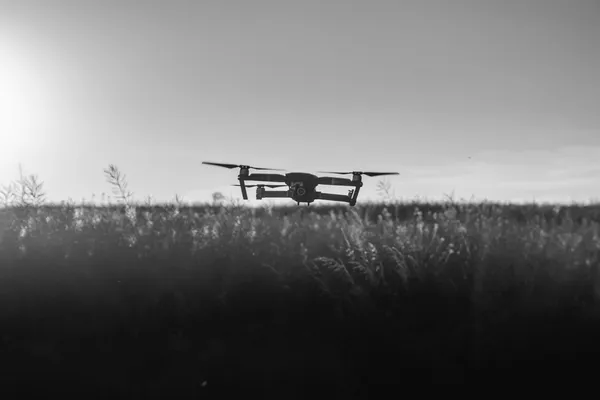
DJI and the FCC: banned by order, sold under another name
The FCC accuses nine companies of selling rebranded DJI drones to dodge the US ban: the independent audit, the Odyssey Robot case, the supply-chain lesson.
-

Mistral and Microsoft on Azure Local: how sovereign is it, really?
Microsoft brings Mistral Medium 3.5, open-weight, to Azure Local: cloud, connected, disconnected. What to check before calling it real AI sovereignty.
-

Palantir's FedStart: the fast lane into the US government cloud
Oligo Security, an Israeli cybersecurity start-up, joins Palantir's FedStart for FedRAMP certification: the fast lane into the US government market.
-

A Corporate AI Policy: Since 2025, No Longer a Choice — a Legal Obligation
Staff pasting confidential data into free chatbots, outside IT control: the AI Act, trade-secret law and the GDPR already make an AI policy mandatory.
-

Anthropic and the Pentagon: banned by contract, used out of necessity
An Air Force memo orders Anthropic purged by September. NSA and Commerce are meanwhile evaluating its software: the lesson on vendor dependency.
-

Sentiment analysis on employees in chat: what the Italian Garante just stopped
A plug-in reads employee stress on Slack and Teams: the Italian Garante blocks it. GDPR, the AI Act and the Workers' Statute draw the line for AI at work.
-
An AI agent attacked Hugging Face with no human operator
Hugging Face confirms an intrusion run end-to-end by an autonomous AI agent, over 17,000 actions in a weekend. What it means for enterprise security.
-

Kimi K3: Microsoft is testing it for Copilot. What changes for decision-makers
Moonshot releases Kimi K3, a 2.8-trillion-parameter open-weight model: Microsoft is trialling it to cut Copilot costs. The real numbers for buyers.
-

NSO and the European Parliament: Pegasus hit the very people investigating it
A member of the EU committee on Pegasus was hacked with Pegasus in 2022-2023: the Kouloglou case and the real limits of European spyware oversight.
-

AI in public administration: what AgID's guidelines change
AgID's guidelines on AI development and procurement in Italian public administration land in 2026: four autonomy levels, LCOAI, AI Bill of Materials.
-

Cellebrite and Russia: the contract ended. The tool did not.
Cellebrite cut off Russia in 2021. Three months later one of its tools was extracting data from a dissident's phone: the lesson on control after signing.
-

Post-quantum cryptography: the real deadline is late 2026, not 2030
The EU post-quantum cryptography roadmap sets its first deadline for late 2026: inventory and transition plan. What changes for business and government.
-

Google Sells AI to Alibaba, Baidu and Tencent Units: It's Legal, and That's the Problem
Google and OpenAI supply AI to the Singapore subsidiaries of three Chinese companies blacklisted by the Pentagon. It's legal. What that means for buyers.
-

AI Liability Directive Withdrawn: the Rule That Matters Lands on 9 December 2026
The AI Liability Directive has been withdrawn, but software and AI now fall under defective product liability: transposed in Italy by 9 December 2026.
-
Cyber incidents on the rise in Italy? No — we're finally seeing them
ACN's 2026 data shows spikes in cyber incidents, but the surge is mainly an effect of NIS2 making them visible: what the numbers say, and ACN's warning.
-

DORA names its critical suppliers: Europe’s financial sector runs on five clouds
The first official DORA list of critical ICT providers — AWS, Google, Microsoft, Oracle, SAP — and the start of supervision in 2026: the concentration lesson.
-

General-purpose AI models: from 2 August, you can demand more from your vendor
From 2 August 2026 the AI Act's GPAI obligations become enforceable: technical documentation, a summary of training data, copyright policies. What to demand.
-

NATO Bets $40 Billion on Drones: Can European Industry Deliver?
The NATO summit in Ankara shifts funding to drones and counter-drone systems. Rheinmetall's order book hits €73 billion, but can industry actually produce?
-

OpenAI and the publishers: the real stakes are the evidence, not the copyright
Publishers led by the NYT are seeking sanctions against OpenAI: it allegedly concealed data-search tools and deleted conversations after a preservation order.
-
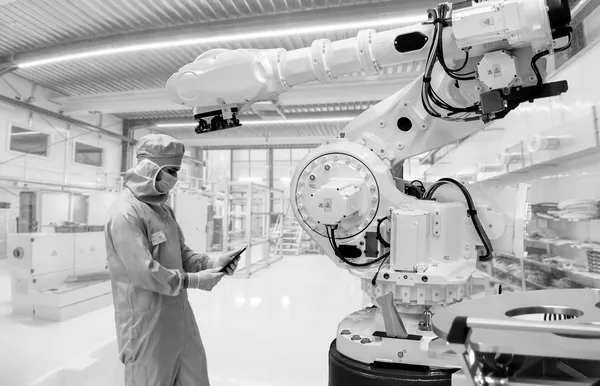
Data Act: your machines' data is (also) yours
The EU Data Act has applied since September 2025: access to connected-machine data, cloud switching and the end of egress fees in 2027. What to do now.
-
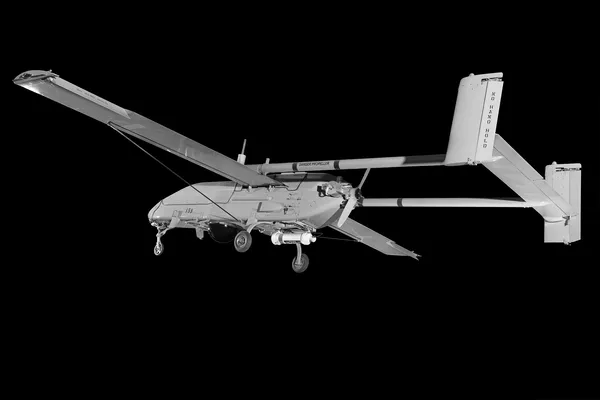
EDIP and Readiness 2030: what changes for the Italian defence industry
EDIP in force, five joint projects proposed in July, €14.9 billion in SAFE funding for Italy: the verified figures and what changes for suppliers.
-
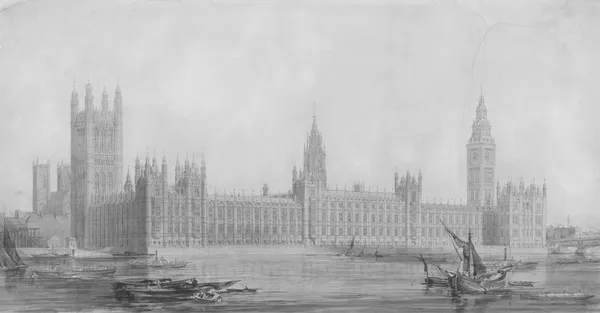
Palantir vs London: when the supplier becomes “a point of weakness”
Met Police contract blocked, lawsuit against the Mayor of London, NHS deal under review: the UK Palantir case is a lesson on public-infrastructure lock-in.
-

Clearview vs Europe: the €100 million fines nobody collects
Five European authorities, over €100 million in GDPR fines never collected: the Clearview AI case exposes the limits of enforcement on biometric data.
-

Cyber Resilience Act: the reporting clock starts on 11 September
From 11 September 2026 manufacturers of products with digital elements must report exploited vulnerabilities and severe incidents within 24 to 72 hours.
-

Italy's AI law (132/2025): what it actually adds to the EU AI Act
Italy is the first EU country with a comprehensive AI law: healthcare, public administration, employment and justice, national authorities, new offences.
-
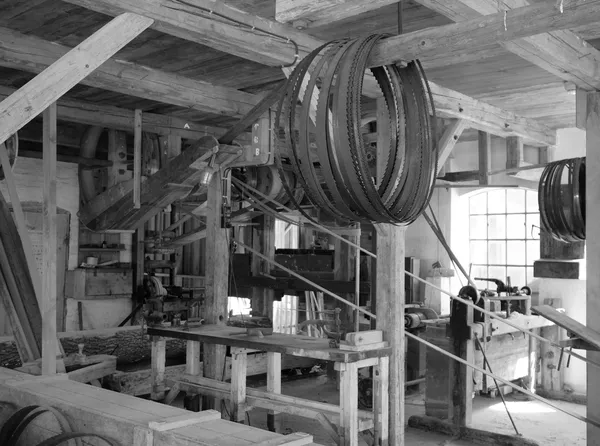
Predictive Maintenance in Emilia's Industrial Districts: Where to Start
ISO 17359 and ISO 20816, the data you already have, the 2026 hyper-depreciation scheme that also covers software: where to start in ceramics and packaging.
-

NIS2: what companies in critical sectors actually have to do
Who falls under the NIS2 Directive, what obligations it introduces and where to start: an operational guide for essential and important entities.
-

Palantir and ICE: the ImmigrationOS contract that split Silicon Valley
The $30 million ImmigrationOS contract between Palantir and ICE, the protests, Karp's defence: a supplier's reputation is now the customer's risk.
-
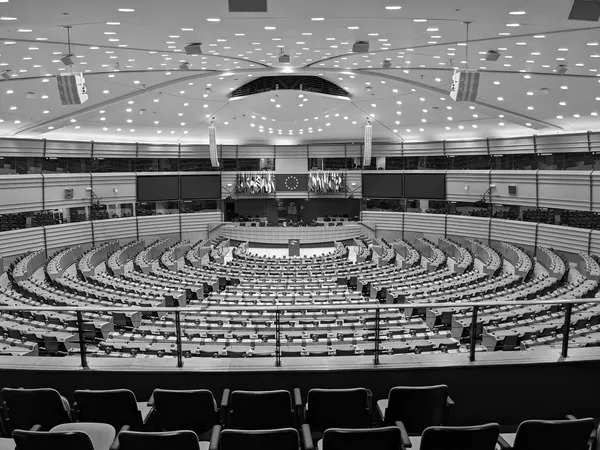
The AI Act's Delay Has a Catch: What Still Applies from 2 August 2026
The Digital Omnibus postpones high-risk obligations to 2027, but transparency duties and penalties apply from 2 August 2026: an updated map of what to do.
-

Helsing: A €12 Billion Unicorn in a Rearming Europe
A €600 million round led by Prima Materia, a €12 billion valuation, drones for Ukraine: the Helsing case, between European sovereignty and human control.
-
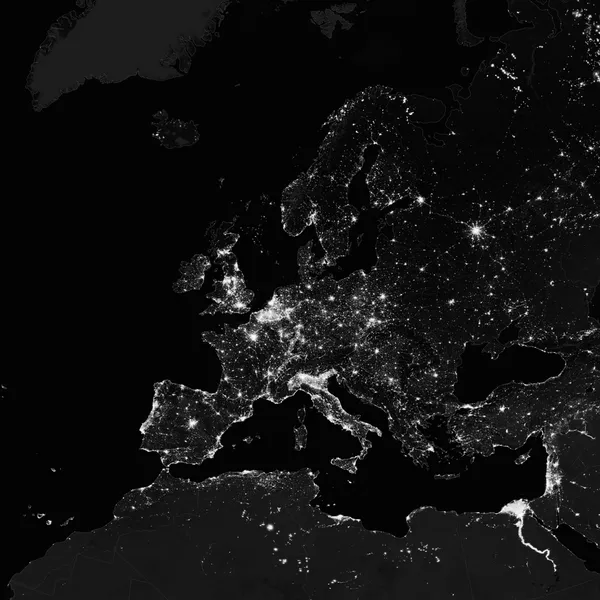
Sovereign AI: what it really means, once you strip away the slogans
For a company, AI sovereignty comes down to four verifiable questions: where the data sits, who can switch off what, what switching costs, who is accountable.
-
Grok at the Pentagon: six days from “MechaHitler” to a $200 million contract
July 2025: Grok’s antisemitic outputs and, six days later, the Pentagon’s $200 million contract. Why reliability is a procurement criterion.
-

Hikvision v. Ottawa: when the camera becomes a matter of state
Canada orders Hikvision to cease operations; the company appeals. US and UK bans stand, yet the cameras remain in European buildings: lessons for procurement.
-

Chinese open-source AI in the enterprise: the numbers add up, so do the risks
DeepSeek, Qwen, GLM and Kimi have passed 45% of global AI traffic at a fraction of the cost of US models. What to weigh before using them safely.
-
Anduril replaces Microsoft: the $22 billion headset
The IVAS headset moves from Microsoft to Anduril, the Arsenal-1 factory in Ohio, products built with private capital: defence procurement is changing.
-

Prompt injection: the attack that arrives by email (and how to contain it)
The top security risk for LLM systems, according to OWASP, is not a virus: it is an instruction hidden in a document. Why filters are not enough.
-

The Anthropic–Pentagon Case: Three Lessons for Every AI Buyer
The US government branded its own AI supplier a national security risk, then a judge froze the whole thing: what it teaches any company buying AI today.
-

AI Act meets GDPR: who does what when you buy an AI system
Provider and deployer, DPIA and fundamental rights impact assessment, the training duty: who does what between the seller and the user of an AI system.
-

NSO v WhatsApp: hacking a platform finally has its day in court
Liability established in 2024, a $167 million verdict in 2025, a permanent injunction: the Pegasus case sets a precedent that concerns every company.
-
AI agents at work: what can they actually touch?
Agents don't just write text: they act on your systems. Minimum permissions, typed actions, human approval and an audit log: the mechanics of guardrails.
-
Microsoft and Unit 8200: when the cloud provider pulls the plug
Intercepted calls archived on Azure, the outside review, services switched off for Unit 8200: the lesson for anyone buying cloud in Europe.
-
95% of AI Experiments Never Reach Production: How to Land in the 5%
The MIT study that got everyone talking: almost all corporate generative AI experiments produce no measurable return. The real causes, and the method.
-

Scale AI inside Meta: when everyone's supplier chooses a side
Meta invests $14.3 billion for 49% of Scale AI, Google and OpenAI leave the platform: the case that exposed the true value of data neutrality.
-

Paragon and Italy: when the spyware vendor terminates the state contract
WhatsApp notifications to ninety targets, the government’s admission, the COPASIR report, Paragon’s termination: one year of the Graphite affair in Italy.
-

Shadow AI: Staff Already Use It, Pretending Otherwise Is the Real Risk
Source code pasted into chatbots, customer data in prompts, personal accounts used for work: how to govern shadow AI without banning it. Policy and tools.
-

Hallucinations: how much can you trust a model, and how do you make it safe
Air Canada found liable for its chatbot's invented answers, lawyers sanctioned over non-existent rulings: hallucinations are a legal risk. Four defences.
-

The Italian Garante vs OpenAI: €15 million to map the perimeter of consumer AI
The Italian Garante's €15 million fine on OpenAI for ChatGPT, between appeal and suspension: why consumer AI at work has a precise GDPR perimeter.
The first step
Operational from week one.
A real use case, on your data, in production. Then it grows, week after week.
It starts with a session with our engagement expert. Your data stays yours, always.