Data centres in Italy: announced capacity is not available capacity
6 min read
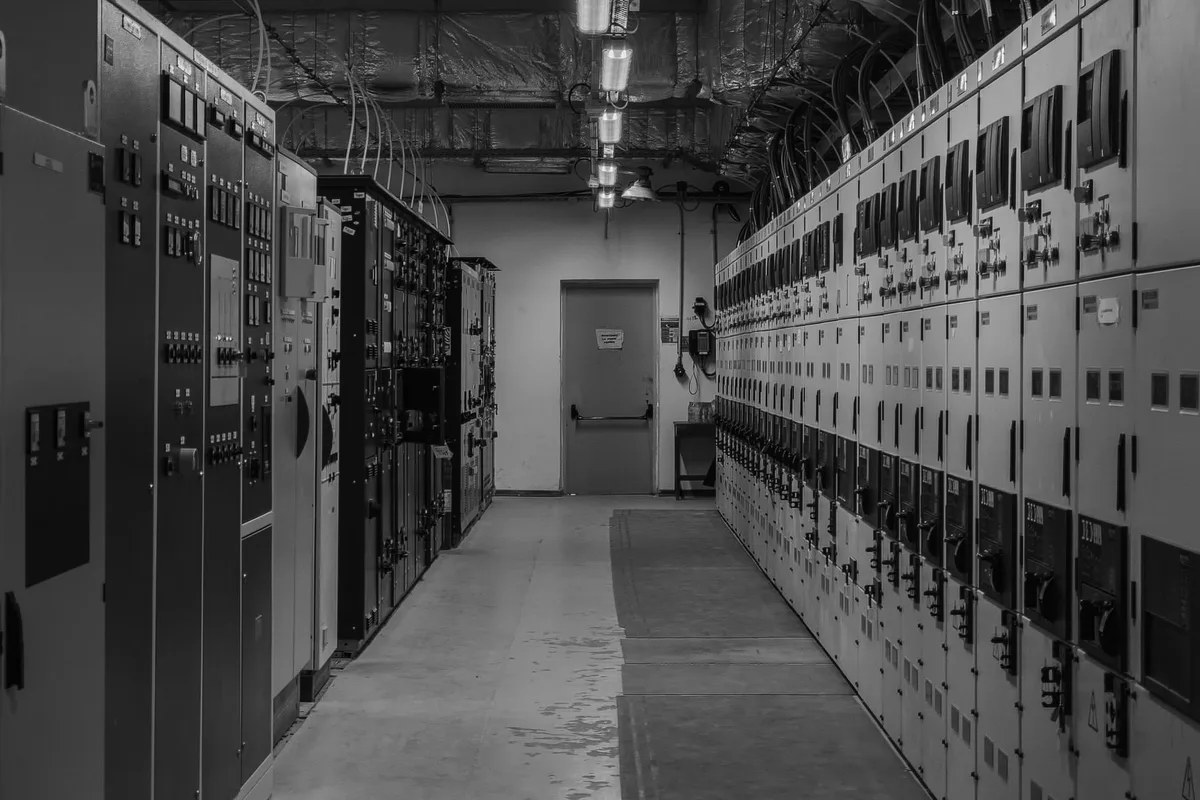
On 23 July 2026 Italy’s Council of Ministers declared two data centre investment programmes of pre-eminent national strategic interest, worth roughly 8 billion euros; the Ministry of Enterprise and Made in Italy (MIMIT) reported it on 24 July. For a company, a public body or a defence organisation buying computing capacity for AI while keeping the data in Italy, the news reads badly in billions. The useful question: when that power exists, will it be yours to buy, on what terms and under which contract? Announced capacity and available capacity are different quantities, and between them sit things you can verify.
What the releases say, and what they do not
- “Equinix per l’Italia” — seven new data processing centres in Settimo Milanese and Cusago, 4 billion euros over 2026-2033, energy requirement covered by renewables. The release specifies the purpose: “both colocation and connectivity services for a plurality of operators, and hyperscale data centres designed to meet the needs of the main global operators and the workloads connected with artificial intelligence”. No power figure in megawatts is declared.
- “Cavour Hyperscale Campus” — redevelopment of the former “Galileo Ferraris” power station at Trino (Vercelli): total designed power between 300 and 400 MW, around 4 billion euros, services conference by end-2026, single authorisation by end-2027, first lot in operation by end-2028. Construction: around 1,200 workers on average, peaks above 2,000; at full operation 300-350 highly qualified posts plus an estimated 1,000 indirect jobs.
- The Trino proposer does not appear in the MIMIT release. It is named in the Piedmont Region note of 24 July, quoting regional president Cirio and councillors Tronzano and Marnati: “Over these months we have worked with TechBau and with the Government”.
- The instrument is the declaration of pre-eminent national strategic interest under article 13 of the “Decreto Asset” (decree-law 104/2023), with an extraordinary government commissioner for each programme: it speeds up authorisation, and says nothing about who will be able to buy that capacity.
Headlines quoting “2,000 jobs” for Trino are repeating the construction peak, not the permanent posts. A number that is not in an official act stays a press figure.
A megawatt of site is not a megawatt for you
The 300-400 MW at Trino is the total designed power of the campus: what the site is sized to draw, not the computing capacity a customer can reserve. Part of it feeds cooling, continuity and distribution — what the PUE indicator of ISO/IEC 30134-2 measures. The rest divides into halls, then cabinets, then contracts. So the concrete question for anyone offering capacity in an announced campus: how much of that power is already committed under multi-year contracts, and how much will be sellable at switch-on. Neither release indicates a share reserved for Italian organisations — not an omission: it is not what such a decision does.
Who owns it, who runs it, under which law
This calls for a criterion, not a suspicion: the questions below apply to any supplier, and they are settled on documents, not on geography.
- Ownership and operation are separate things. Whoever owns the building and the infrastructure may not run the systems inside it: two parties, two contracts, two chains of liability.
- What counts is the legal order the operator is subject to, and the one its parent is subject to. A production order issued abroad reaches a company, not the floor of a data hall. The four questions that reduce “sovereignty” to checkable facts we have already set out.
- Remote administrative access is access to the data. The contract must state who comes in, from where, with what logging, and with what notice if another operator takes over.
Space and power, or a managed service
It is the distinction the MIMIT release makes without underlining it, placing “colocation and connectivity” next to “hyperscale data centres”. With colocation you buy space, power, cooling and connectivity: hardware and operating system are yours, models and data stay under your control, and you need capital and staff to run them. With a managed service it is the supplier that operates the systems: in GDPR terms it acts as a processor, with documented instructions, a chain of sub-processors to authorise and audit rights to exercise (article 28). This is not a nuance: it changes who answers, and what you must be able to demonstrate.
For the public sector, geography is not enough
A data centre in Italy does not qualify a service. For public bodies the class of the data predetermines the regime: the ACN cloud services regulation requires the service itself to be qualified for critical and strategic data, and the transitional window closed on 30 June 2026. Inside the national cyber security perimeter there is a second track: ICT supplies in the listed categories — including AI systems for managing networks and systems — must be notified to the CVCN before award. Neither duty is discharged by showing that the servers sit in Trino or Cusago.
What to do now
- Take the official calendar, not the headlines: at Trino the first lot is expected by end-2028, the Milan programme runs to 2033. A purchase for the next eighteen months cannot count on it.
- Ask in writing, of anyone offering capacity “in Italy”, for three names: owner of the infrastructure, operator of the service, parent of the operator.
- Decide first which model you need — space and power, or a managed service: it determines skills, capital and liability.
- Check the qualification of the service against the class of the data before the tender, not at signature.
The point.
A data centre built in Italy is not, in itself, a guarantee about your data. It becomes one when three things are: ownership of the infrastructure, the contract governing access, and the legal regime applying to whoever runs it. The 23 July decision speeds up authorisations, and that matters; but between the decision and the first powered square metres, on the releases’ own timetable, lie at least two and a half years.
Anyone who meanwhile must let a model read contracts, technical files, expert reports or confidential documentation is deciding on what exists today. That is why we work in two modes, and only two: on-premise, with the AI installed in the customer’s own environment, or on a dedicated cloud reserved for the single customer, reached over a dedicated VPN, with the data centre resident in Italy and the premises staffed directly by us. In both cases the three names are known before signature: that is the criterion our architecture is built on, not a press-release promise.
Do you have to move confidential data into an AI system without knowing whose ownership and which contract it will end up under? Let us talk it through in a thirty-minute session: we start from the three names and the class of the data.