On-premise, in your own environment
The AI runs on infrastructure you already control. Documents never cross the boundary of your network, and administration stays with your IT department.
Solutions · Assisted document review
We build the system that holds manuals, instructions, technical files and tender specifications together in a single model, with agents trained on your own language. Here we point it at the requirements a regulation imposes, point by point: the same system reads a technical file the way it reads a tender specification or a patient record. The AI shows where the text does not hold and proposes the correction; review and sign-off stay with your engineering or legal department.
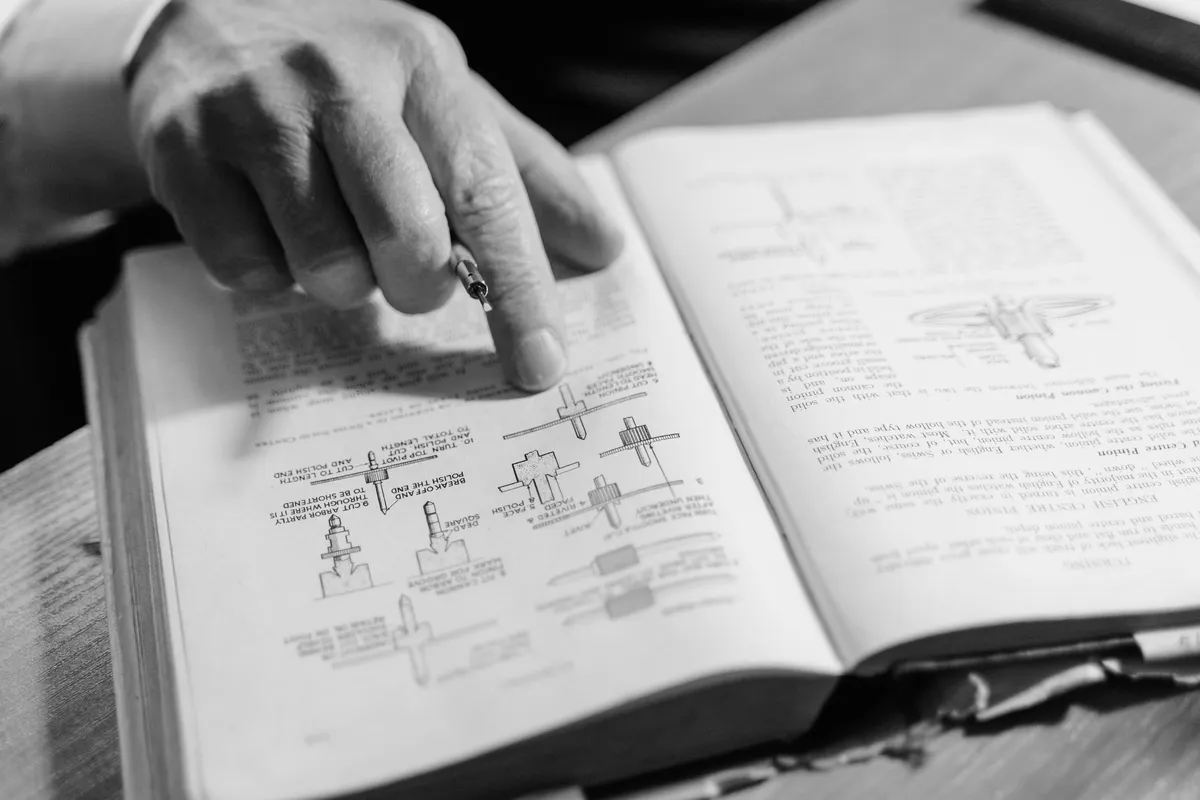
Before the regulation there is a fact: nobody in the company reads the documentary corpus end to end. Manuals, instructions, technical files, data sheets and tender specifications live in separate folders, in several languages and several revisions, and nobody can say any more which text derives from which. That is where our work starts: bringing them into a single model and putting agents on top of it that check it against whatever list of requirements you hand them. The most urgent list, today, has a date. Regulation (EU) 2023/1230 replaces Machinery Directive 2006/42/EC on 20 January 2027: without instructions compliant with Annex III there is no valid declaration of conformity, and without the declaration there is no CE marking. This is not a penalty that arrives after an inspection: it blocks you on the day you place the machine on the market, and anyone with hundreds of documentation variants across several languages has already spent most of the 42-month window.
The list changes without rebuilding the system. The Cyber Resilience Act (Reg. EU 2024/2847) requires technical documentation, a software bill of materials and vulnerability handling for connected products, with reporting duties from 11 September 2026; a tender specification, a framework contract or a clinical protocol are different corpora read by the same mechanism. And there is a second constraint, about the content itself: calibration parameters, thresholds and maintenance cycles are know-how. Italian Legislative Decree 63/2018 protects them as a trade secret only if the holder takes reasonably adequate steps to keep them secret. A manual uploaded to a generic cloud assistant quietly stops meeting that condition: which is why the model is dedicated, trained on your own language, and runs where you decide — on-premise in your own environment, or on a dedicated cloud in Italy.
Solutions
A real set of documents — a machine family, a technical file, the compliance binder — and the requirements to check it against, listed point by point before we start.
Two modes, your choice: on-premise in your own environment, or on our dedicated cloud in Italy. In both cases the AI is not connected to the open web and no document leaves the perimeter you control.
Each document is read against the applicable list: where the text fails to cover a point or omits a clause, the gap is shown with the legal reference and a proposed rewrite.
Your engineering or legal department accepts, edits or rejects every proposal. Critical decisions stay human; the AI proposes and executes within the thresholds you approved.
A typical case, not a real client. A special-machinery manufacturer: 180 employees, 240 manuals in the catalogue across six languages, many of them variants derived from the same base text. They were written under the 2006 directive. Nobody in the engineering department could say how many would survive a check against Annex III today, and reading them all by hand would mean tying up two people for months.
The 240 manuals go into a single index: which machine, which language, which revision, which market. The system recognises the variants derived from the same base text, so a correction written once carries across wherever that text is shared; the engineering department confirms which documents are still live and which are not.
Each manual is read against the list of applicable requirements, point by point: intended use, reasonably foreseeable misuse, residual risks, maintenance, availability of the instructions in digital form. The environment is the one the company chose — on-premise, or a dedicated cloud with its data centre in Italy — and the files never leave the perimeter.
One line comes out for every point left uncovered: which manual, which requirement, on which page, with the legal reference. The head of engineering sets the order of work and starts with the machine families that go to market first.
For every gap the system proposes the missing text in the language of the manual, consistent with the terminology the company already uses. The technical writer accepts, edits or rejects it: no proposal enters a manual without human review.
The corrected manuals go back into the technical file. What remains is a line-by-line log: for each manual, the points checked, the date, the outcome and the name of whoever accepted the rewrite. That is the part an inspection or a tender asks for.
On this example the checking pass goes from roughly 120 person-days — half a day per manual, before a single correction is written — to around ten person-days spent reviewing proposals that are already drafted. That is an order of magnitude estimated on a typical case, not a promise. At no point does a manual leave the company: calibration parameters, thresholds and maintenance cycles stay inside the perimeter, which is the condition for keeping them protectable as trade secrets.
An illustrative example on a typical case: the assumptions are recalibrated on your own data.
The AI runs on infrastructure you already control. Documents never cross the boundary of your network, and administration stays with your IT department.
An environment reserved for a single client, a dedicated VPN, a data centre resident in Italy, in premises we staff ourselves. Nothing is shared with other clients.
In both cases the models are dedicated and closed, disconnected from the open web: nothing they read feeds third-party services. They are open-weight models, with the weights archived inside the perimeter where they run: the version you use changes when you decide it does.
The check runs inside the perimeter you control: on-premise in your own environment, or on our dedicated cloud with its data centre in Italy. In both cases the model is dedicated and closed, not connected to the open web, and the manuals never leave. Each document is read against the list of applicable requirements and every gap is shown with the legal reference.
The system does the point-by-point comparison; review and sign-off stay with your engineering or legal department. One line comes out for every point left uncovered — which manual, which requirement, on which page — and for every gap a proposed rewrite in the language of the manual. No proposal enters a manual without human review.
It is the same method applied to a different corpus: the real binder is compared measure by measure with what is required, and each measure has three possible outcomes — present and approved, present but never approved, missing. For the third case a draft text comes back for review. The full path is described under the “Data protection and perimeter” solution.
Italian Legislative Decree 63/2018 protects a trade secret only if the holder takes reasonably adequate steps to keep it secret. A manual uploaded to a generic cloud assistant quietly stops meeting that condition; a dedicated AI inside the perimeter keeps it. Calibration parameters, thresholds and maintenance cycles stay where they are.
It depends on what the document contains. If it holds know-how or material that cannot circulate, a generic service is not compatible with the duty to take adequate steps. The two modes we offer both stay inside the perimeter: on-premise in your own environment, or a dedicated cloud with its data centre in Italy.
Other solutions
Governance of AI systems Data protection and perimeter Analysis of sensitive data
The first step
A real use case, on your data, in production. Then it grows, week after week.
It starts with a session with our engagement expert. Your data stays yours, always.