Archer, Anduril and Halo: one autonomous aircraft, two regimes, no numbers
6 min read
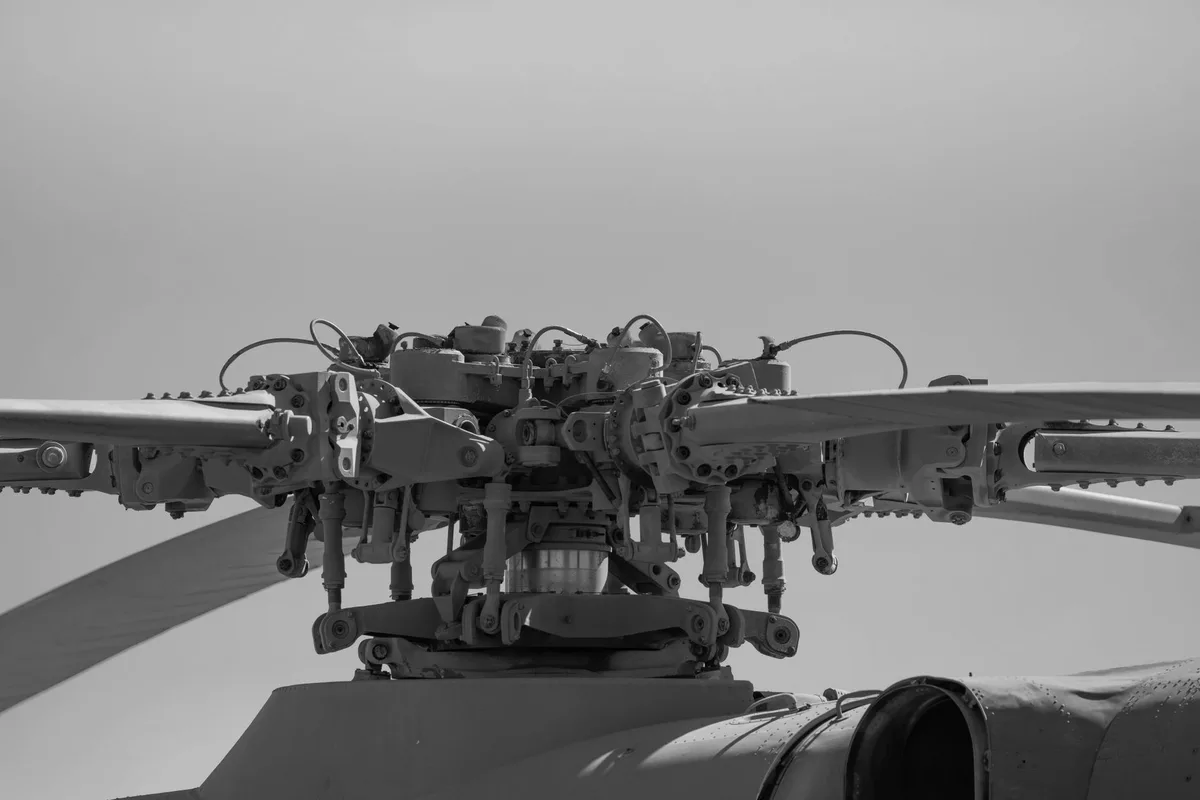
On 20 July 2026, the opening day of the Farnborough International Airshow, Anduril unveiled Thunder, an autonomous tiltrotor attack aircraft. On 22 July Archer Aviation unveiled Halo: same airframe, same propulsion, same core systems, civil market. One programme, two names, two press releases, two audiences. An honesty note first: Archer is not a garage start-up, it is a listed company worth about $3.6 billion. It is, however, a young builder of civil aircraft entering the defence supply chain — and that is the story.
Who Archer is, and who is the small party here
Founded in 2018 in San Jose, California, by Adam Goldstein and Brett Adcock, Archer has been on the New York Stock Exchange since September 2021, after merging with the Atlas Crest SPAC. Its product is Midnight, a four-passenger electric air taxi: in April 2026 it closed the third of the four stages of FAA type certification, and it is not certificated. The planned lines of business, the annual report says, have yet to generate significant revenue: a $618.2 million net loss in 2025, roughly $2.3 billion since inception, $1.6 million of revenue in the first quarter of 2026 against $1.8 billion of liquidity. Anduril was founded a year earlier, in 2017: on 13 May 2026 it announced a $5 billion raise at a $61 billion valuation, with $2.2 billion of 2025 revenue. The “large” party is nine years old; the “small” one is listed and holds more cash than revenue.
The technology: series hybrid, tilting rotors
A battery air taxi flies for tens of minutes. For heavy loads, far away and without a runway, the stated choice is the series hybrid: a combustion engine generates current, electric motors turn the rotors, and the battery no longer has to hold the whole mission’s energy. The rotors tilt and vary their rpm — high on take-off, low in cruise — an architecture Archer reinforced in 2025 with Overair’s patents and a Karem licence.
That is where the verifiable ends. For Halo, no payload, range, speed or take-off mass has been published: the release is entirely qualitative. Thunder’s three spec entries are comparisons, not measurements: among them, “more stowed kills per sortie than Apache” and “self-deploys anywhere in the world”. The only counts released concern armament — ten air-to-ground missiles, or seventy-six 70 mm rockets — and the “Group 5” class; first flight is planned for 2027.
The terms of the agreement, on the record
The agreement was not born at Farnborough. On 12 December 2024, in a Form 8-K, Archer told the SEC of a strategic collaboration agreement with Anduril: “the initial term of the collaboration extends through May of 2026 and is exclusive in nature, such that neither party may work with another third party on a substantially similar project”. That term has expired, and no later document publicly renews it. “Substantially similar project” is nowhere defined. And the agreement has never been filed with the SEC, not even redacted: it was “furnished” under Item 7.01, not filed as a material contract.
The money, on the record, moves one way: the same day Archer placed shares for roughly $430 million gross, stating that the proceeds would fund the joint development with Anduril — which is not an Archer shareholder. Not public: the revenue split, the share of development costs, ownership of the intellectual property in the common airframe, or termination clauses. The 20 July release promised “the first commercial customers later this week”: on the 22nd one arrived, Marubeni Aerospace, as a “strategic launch partner” — no order, no value, no delivery date.
Who decides, and who can reconstruct it
Anduril writes that its autonomy software translates operator intent into decisions on route, timing, tasking and deconfliction: weapons release is not on that list, and the release does not address it. Several outlets have written that the final decision on a lethal engagement remains subject to human approval. We checked seven of them, plus both companies’ releases and product pages: that formula is not attributed to anyone at either company, and neither has taken a public position on weapons release.
The American rule is less vague than the marketing. Directive DoDD 3000.09, reissued on 25 January 2023, requires at paragraph 1.2.a that autonomous weapon systems “be designed to allow commanders and operators to exercise appropriate levels of human judgment over the use of force”: a design requirement, not shot-by-shot consent. Paragraph 1.2.c requires two senior reviews, before formal development and before fielding; paragraph 1.2.a.(2)(c) requires technologies and data sources “transparent to, auditable by, and explainable by relevant personnel”. On its autonomy-software page Anduril claims nothing about logs or traceability.
What it means for Europe and Italy
One airframe, two regimes. Regulation (EU) 2018/1139, Article 2(3)(a), excludes from EASA’s scope aircraft “while carrying out” military or police activities under the responsibility of a Member State: the military twin is outside, the civil one inside. Inside what is unclear: for an uncrewed cargo VTOL above 600 kg there is no European airworthiness code. Special condition SC-VTOL-02 covers only aircraft carrying people on board; the SC Light-UAS stop at 600 kg; the future CS-UAS is planned for decision in 2029. Meanwhile, the AI Omnibus enters into force tomorrow, amending Regulation 2018/1139 as well.
Then export control. Item 1.A.2 of MTCR Category I covers complete uncrewed systems “capable of” delivering at least 500 kg to at least 300 km, with a “strong presumption to deny” transfers: capability counts, not configuration. Without those two figures, you cannot tell which regime applies. In Italy, the 2025-2027 Multi-Year Planning Document contains no requirement for a Group 5 uncrewed rotorcraft: whoever buys for defence will find these machines in tenders, not in the national supply chain — as with Thales and Destinus and with ASIO’s GPS-free navigation.
The operational lesson
- Check the expiry date, not the label on the agreement: an initial term that has ended and was never publicly renewed is a fact, and a “strategic launch partner” is not a customer. Ask for the text in force, units, price and delivery.
- Demand the mission numbers — payload, range, speed, take-off mass — if only to know which export regime applies.
- Put three lines about autonomy in the contract: who decides what, which logs are kept and for how long, who may read them.
An announcement describes an intention; a contract imposes an obligation. For an autonomous aircraft as for an AI system the question is the same: can you reconstruct how a decision was taken, on infrastructure you control? That is the criterion behind every architecture we build to stay verifiable: dedicated, closed models, detached from the open web, on-premise in the client’s environment or on a dedicated cloud reserved for the single client, with a dedicated VPN, data centre in Italy and premises staffed by us.
Do you have to assess a supplier arriving with a “strategic partnership” without numbers, or an autonomous function without logs? Let’s talk it through in thirty minutes.
Sources
- Archer Aviation — Introducing Halo: Archer’s Commercial Variant of Dual-Use Autonomous VTOL Aircraft Platform Developed With Anduril (press release, 22 July 2026)
- Anduril — Introducing Thunder: Autonomous Attack Rotorcraft for the Near-Surface Fight (press release, 20 July 2026)
- SEC — Archer Aviation, Form 8-K of 12 December 2024: terms of the Anduril collaboration and the $430 million placement
- SEC — Archer Aviation, Form 10-K for fiscal year 2025 (filed 2 March 2026)