Partly completed machinery: assembly instructions, not a user manual
7 min read
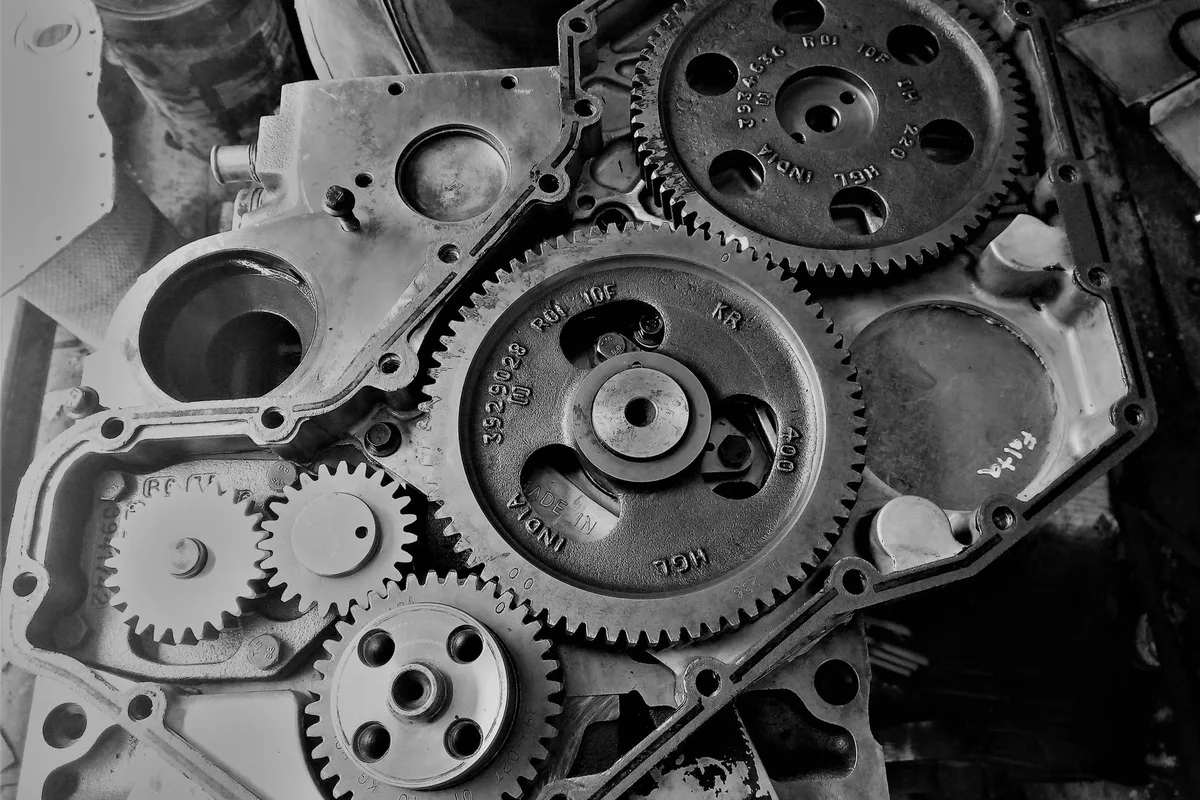
Whoever buys a production line buys pieces someone else must put together, not a machine. Regulation (EU) 2023/1230 — applicable from 20 January 2027, as verified line by line — calls that piece partly completed machinery and defines it at Article 3, point 10: “an assembly which is not yet machinery as it cannot in itself perform a specific application and which is only intended to be incorporated into or assembled with machinery or other partly completed machinery or equipment, thereby forming machinery” — an assembly that does not yet constitute a machine, since on its own it cannot perform a specific application, and that is meant only to be incorporated into or assembled with other machinery, other partly completed machinery, or equipment, so as to form a machine. A gear reducer, an arm, a control module: alone it does nothing specific, and waits for the assembler who alone will see it whole.
Not a manual, assembly instructions
That manufacturer signs neither the same paper nor the same document as the manufacturer of a finished machine. Article 11, governing manufacturers of partly completed machinery, says so at paragraph 7: “Manufacturers shall ensure that the partly completed machinery is accompanied by the assembly instructions set out in Annex XI.” Not instructions for use: Article 3 reserves that term for a definition speaking explicitly of informing the user “of the intended and proper use of that machinery or related product”, of the machine or related product, wording that never appears with partly completed machinery anywhere in the text. Assembly instructions answer a different question: how to incorporate it, not how to use it.
As with finished machines, the manufacturer may choose digital here too: “The assembly instructions may be provided by the manufacturer in digital format”, under the same three-point scheme as Article 10(7). Comparing the two shows two precise gaps. First, online availability: Article 10(7)(c) requires “make them accessible online during the expected lifetime of the machinery or related product and for at least 10 years after the placing on the market of the machinery or related product”; Article 11(7)(c) is narrower — “make them accessible online for at least 10 years after the placing on the market of the partly completed machinery”. Second, non-professional users: Article 10(7) devotes a paragraph to them, safety information on paper regardless; Article 11(7) has none. The duty does not stop at the manufacturer: Article 14 requires that “Importers shall ensure that the partly completed machinery is accompanied by the assembly instructions referred to in Article 11(7)”, and Article 16 has the distributor verify that those instructions are there and “that they are in a language which can be easily understood by the person who incorporates the partly completed machinery as determined by the Member State in which the partly completed machinery is to be made available on the market”. What coincides is the free paper copy within one month on request at purchase, with “the person who incorporates the partly completed machinery” standing in for the finished machine’s generic user.
Fourteen items, in Annex XI
Annex XI lists what those instructions must contain, where relevant: a general description of the partly completed machinery; drawings, diagrams and explanations for incorporation, maintenance, repair and checking correct operation; warnings on foreseeable misuse; assembly, installation and connection instructions, including fastening systems; noise or vibration information relevant to incorporation; the Annex III essential requirements that apply to it; essential characteristics of tools that may be fitted to it; conditions for stability, transport, assembly and dismantling; safe transport and storage instructions, with the mass of individual elements; the procedure for accident, breakdown or jamming; the user’s adjustment and maintenance operations, with instructions to perform them safely; spare-part specifications relevant to safety; and a clear identification of the instructions’ version against the model. Where the partly completed machinery is meant for a machine covered by Annex III, chapters 2 to 6, the assembly instructions must also carry the relevant information for that machine’s own instructions for use — the hinge between the supplier’s document and the assembler’s manual. Annex XI’s third paragraph adds one more duty: the assembly instructions must contain the EU declaration of incorporation, or the address or optical code where it can be found.
Not a declaration of conformity
That document is not a declaration of conformity either. Article 22 calls it the EU declaration of incorporation, structured in Annex V, Part B — a different template; Annex IV already splits the two: Part A, for machinery and related products, requires “a copy of the instructions for use and the information set out in section 1.7.4 of Annex III”; Part B requires at point (i) “a copy of the assembly instructions for the partly completed machinery set out in Annex XI”. Checked against Part A — the declaration of conformity — two Part B items are missing there. Point 7: “An undertaking to transmit, in response to a reasoned request by the national authorities, relevant information on the partly completed machinery. This shall include the method of transmission and shall be without prejudice to the intellectual property rights of the manufacturer of the partly completed machinery.” Point 8: “A statement that the partly completed machinery shall not be put into service until the final machinery into which it is to be incorporated has been declared in conformity with this Regulation.” Part A has neither.
The technical documentation for partly completed machinery — Annex IV, Part B, kept available to market surveillance authorities for at least 10 years under Article 11(3) — also includes the risk assessment, design drawings and standards applied: the manufacturer’s own file must hold, in full, whatever it handed to the assembler.
What a tender specification should ask for
Whoever buys partly completed machinery to build into a larger line cannot demand from the supplier the finished machine’s intended use, unknown to a supplier who did not design it, nor the residual risks for the operator who will run the finished plant: neither appears in Annex XI. What can be demanded, text in hand, is what the regulation already requires: the Annex XI instructions item by item, not an extract; the Part B declaration with points 7 and 8 filled in, not blank; if digital, the access address, printing and local saving, and a commitment to 10 years online from placing the partly completed machinery on the market — not the line that incorporates it; the free paper copy within a month, if requested at purchase; a language the incorporation team can understand. All of this serves one purpose: letting the assembler — the only party who knows the finished machine — write its own manual under Annex III, with its own declaration of conformity and CE marking, instead of finding, once the job is done, that the starting data is missing.
It happens, out of habit from the old directive or because the supplier also sells complete machines, that the document handed over is titled declaration of conformity rather than declaration of incorporation. The difference is not cosmetic: Part A has neither the undertaking to inform national authorities nor Part B’s clause on putting into service, and its point 1 presupposes a finished product, not an assembly still waiting to become one. Whoever gets that paper instead of the other holds a form that, item by item, answers different questions.
Checking that Annex XI and Part B are genuinely filled in, item by item, before sign-off, is the compliance side of the work — handled, in our manufacturing engagements, by reading assembly instructions and declarations of incorporation without a single drawing leaving the company’s perimeter. The same items — designation, year of construction, requirements applied, residual risks — are also the data behind the plant map that later drives the decision to stop a line or step in before a failure.
Want to check whether the assembly instructions and declaration of incorporation you have on file already contain everything Annex XI and Part B require? A 30-minute operational trial with one of our experts is enough for the first map.
Sources
- Regulation (EU) 2023/1230 of the European Parliament and of the Council, of 14 June 2023, on machinery — consolidated text 02023R1230, as of 27 July 2026 (EUR-Lex)
- Regulation (EU) 2023/1230 — official text as published (EUR-Lex)
- Corrigendum to Regulation (EU) 2023/1230, OJ L 169, 4 July 2023, p. 35 (EUR-Lex)