EDIP and Readiness 2030: what changes for the Italian defence industry
5 min read
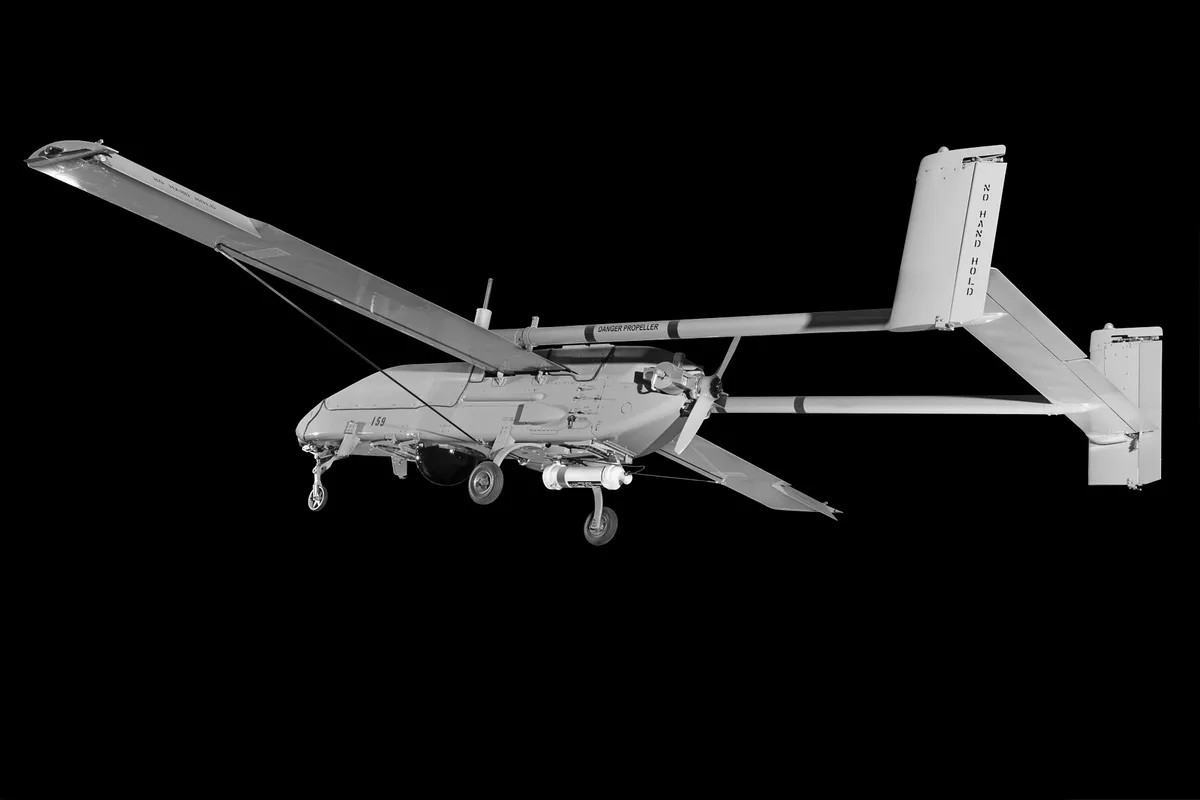
On 3 July 2026 the European Commission proposed the Union’s first five joint defence projects ever: drones and counter-drone systems, maritime and seabed defence, space, integrated air and missile defence with early warning, and eastern flank surveillance. An average of eighteen member states per project, Ukraine involved in four out of five, a declared ambition of around €190 billion in combined investment by 2036. This is not an isolated announcement: it is the latest piece of a construction that, over two years, has changed the rules of the game for anyone selling technology in Europe — even those who have never worked in defence.
The timeline, in verifiable dates
It’s worth setting the facts out in order, because a good deal of loose talk circulates on this subject:
- March 2024 — the Commission proposes EDIP, the European Defence Industry Programme.
- March 2025 — the “Readiness 2030” White Paper and the plan to mobilise up to €800 billion for European rearmament.
- May 2025 — SAFE enters into force: up to €150 billion in EU loans on favourable terms for defence procurement. Italy has been provisionally allocated the fifth-largest share: €14.9 billion.
- December 2025 — Regulation (EU) 2025/2643, EDIP, receives the Council’s final approval on 8 December and enters into force on 30 December.
- March 2026 — the Commission adopts the first EDIP work programme for 2026–2027, worth around €1.5 billion in grants, of which €300 million is earmarked for the instrument supporting Ukraine.
- July 2026 — the five joint projects, with €325 million already earmarked in the EDIP budget. It is now up to the Council to formally establish them.
The figures, read correctly
€1.5 billion in grants is not much, set against defence budgets. But reading EDIP as a fund is the most common mistake: EDIP is, above all, the framework — common rules for joint procurement, a European supply-security regime, and European preference as an eligibility criterion: as a general rule, at least 65% of component cost must originate in the EU, the EEA or Ukraine, and the project authority cannot be based in a third country. The real money comes from elsewhere: SAFE loans, growing national budgets, the €190 billion ambition behind the five projects. For Italy, the €14.9 billion in SAFE funding remains a provisional allocation — the debate over whether and how to use it is still open — but Europe’s industrial direction is now fixed in the regulations, not in press releases.
Five projects, one common denominator: data
Look at the five projects with an engineer’s eye and the weapons platform all but disappears. Drones and counter-drone systems are sensors, autonomy and electronic warfare. Seabed defence is the protection of cables and pipelines — the same critical infrastructure that civilian internet and energy depend on. Space is observation and communications. Integrated air defence is a radar network that has to fuse data across twenty countries in real time. Eastern flank surveillance is, again, sensors and information fusion. The common denominator is information superiority: gathering, integrating, protecting and distributing information faster than the adversary. It is the same logic we apply in the defence sector, and it is why the pool of suppliers is widening: software, sensor technology, communications and operational AI matter just as much as the platforms.
What this means for Italian suppliers
For Italian industry — not only the large groups, but the supply chain of electronics, precision mechanics, software and integration — this is a real window of opportunity and, at the same time, a test. Entering a defence supply chain carries requirements worth knowing before bidding: European eligibility of components and project ownership, security clearances, export and dual-use constraints, and a demonstrable cybersecurity posture. On this last point the contest has already begun: many defence suppliers fall within the scope of the NIS2 Directive, or are reached by its obligations through their customers, because entities in scope of NIS2 must assess the security of their own suppliers. Those who arrive at the tenders with their data in order, a traceable supply chain and demonstrable compliance start with a genuine advantage — this is the principle behind dual-use compliance: the regulatory constraint treated as part of the project, not as an obstacle.
What to do
For an Italian technology organisation looking to position itself, the sensible order is this:
- Map your offering against the five capability areas: sensors, autonomy, communications, data fusion, infrastructure protection. Many civilian capabilities are directly transferable.
- Check the eligibility of your supply chain: origin of components, project ownership, dependencies on third countries.
- Get ahead on cybersecurity: NIS2, supply-chain security, incident management. For prime contractors, it is a supplier qualification criterion.
- Clarify clearances and constraints: security clearance, export control, dual-use.
- Keep a close watch on the calls under the EDIP 2026–2027 work programme and seek out consortia: in defence, entry almost always comes through a prime contractor’s supply chain, not alone.
- Start small: an operational trial on a narrowly defined use case — a protected data flow, an integrated sensor — is worth more than ten statements of intent.
Want to understand where your technology fits within this landscape, and what’s missing before you apply? A 30-minute session with one of our experts is the fastest place to start.