NATO Bets $40 Billion on Drones: Can European Industry Deliver?
4 min read
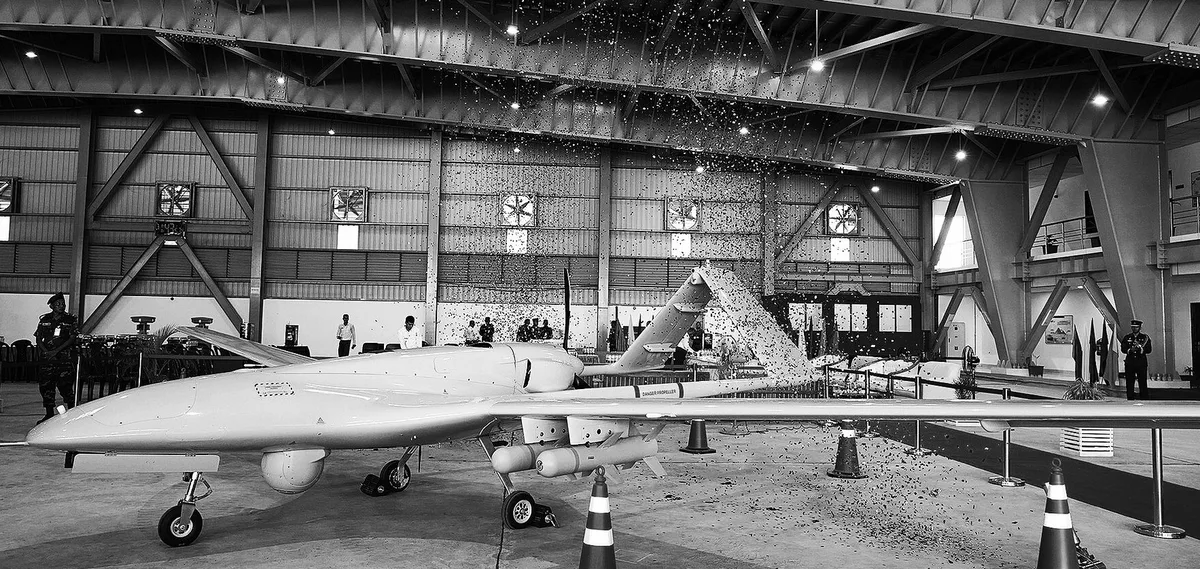
On 7–8 July 2026 the NATO summit in Ankara put on record a shift that had been building for months: over $40 billion over five years on counter-drone capabilities, the “NATO Drone Edge” initiative, the goal of quintupling drone operators by 2027, and new orders for surveillance and air defence. The centre of gravity of European military spending is moving from heavy armoured vehicles towards drones, air defence and autonomous warfare. For the defence industry — European champions included — this is at once a huge opportunity and an uncomfortable question: can they really deliver what they promise? It is a current story, and we tell it here for the facts and for the lesson.
The facts, in order
- Ankara, 7–8 July 2026: Secretary General Rutte announces “NATO Drone Edge” and over $40 billion in counter-drone investment over the next five years, plus joint procurement (surveillance aircraft, tankers, uncrewed systems).
- The order rush: order books at European groups are at record highs. Rheinmetall’s order backlog reached €73 billion at the end of March (up from €56 billion a year earlier), with projections towards €135 billion by the end of 2026.
- Analysts’ doubt: the question is no longer whether demand exists, but whether valuations have outrun production capacity. In the first quarter of 2026 Rheinmetall trimmed its margin guidance and missed revenue consensus, with negative cash flow due to investment.
- The doctrinal shift: analysts estimate that the share of profit from armoured vehicles could fall from around 45% (2023) to around 20% (2030), in favour of air defence, drones and autonomy.
We offer no view on share prices: that is not our trade. The point that interests us is a different one.
Lesson one: doctrine changes faster than factories
The gap between what is decided at a summit and what a production line can actually turn out is the real bottleneck of European defence. It works as a metaphor for any organisation: announcing a strategy is free, executing it is not. The same companies now promising drones by the million have to build capacity, supply chains and — above all — the information systems and data that hold design, production and logistics together at this scale. Superiority does not belong to whoever orders the most: it belongs to whoever turns the order into delivery. It is the same operating principle we have always described — from data to executed action, not to a slide deck.
Lesson two: “autonomous” must not mean “without control”
The pivot towards drones and autonomous warfare brings back the question running through the whole sector: where automation ends and human decision-making begins. To work, counter-drone systems must react in a fraction of a second — but “fast” cannot mean “without a human in charge”. It is the very fault line an entire market is grappling with, and it is why the EU AI Act and Italian Law 132/2025 insist on human control in critical applications. For anyone supplying technology to defence — in Italy as elsewhere — the clause that matters is the one that keeps an operator in the loop, demonstrably and on record.
Lesson three: industrial sovereignty is measured in the supply chain, not on the flag
The summit also carries an undertone: many states are trying to cut their dependence on non-European supplies. But sovereignty is not buying European on principle — it is having a supply chain that holds up, data and designs under control, and the ability to replace a supplier without bringing everything to a halt. It is the same lesson that applies to cloud and to AI: depending on a handful of critical suppliers is a systemic risk, whatever flag is on the logo.
What to take away (even outside defence)
- Be wary of announcements without capacity: the right question for any supplier is “how long does it actually take you to deliver, and with what supply chain?”
- Demand contractually binding human control wherever automation touches critical decisions.
- Measure your dependence on strategic suppliers and keep a credible plan B.
- Invest in the data and processes that turn orders into deliveries: that is where you win, not in the press release.
Want to turn declared capacity into operational capacity — data, processes, control? Half an hour with one of our experts to work out where to start.