AI capacity doubled and 40% more controllers: Singapore puts both in the same plan
6 min read
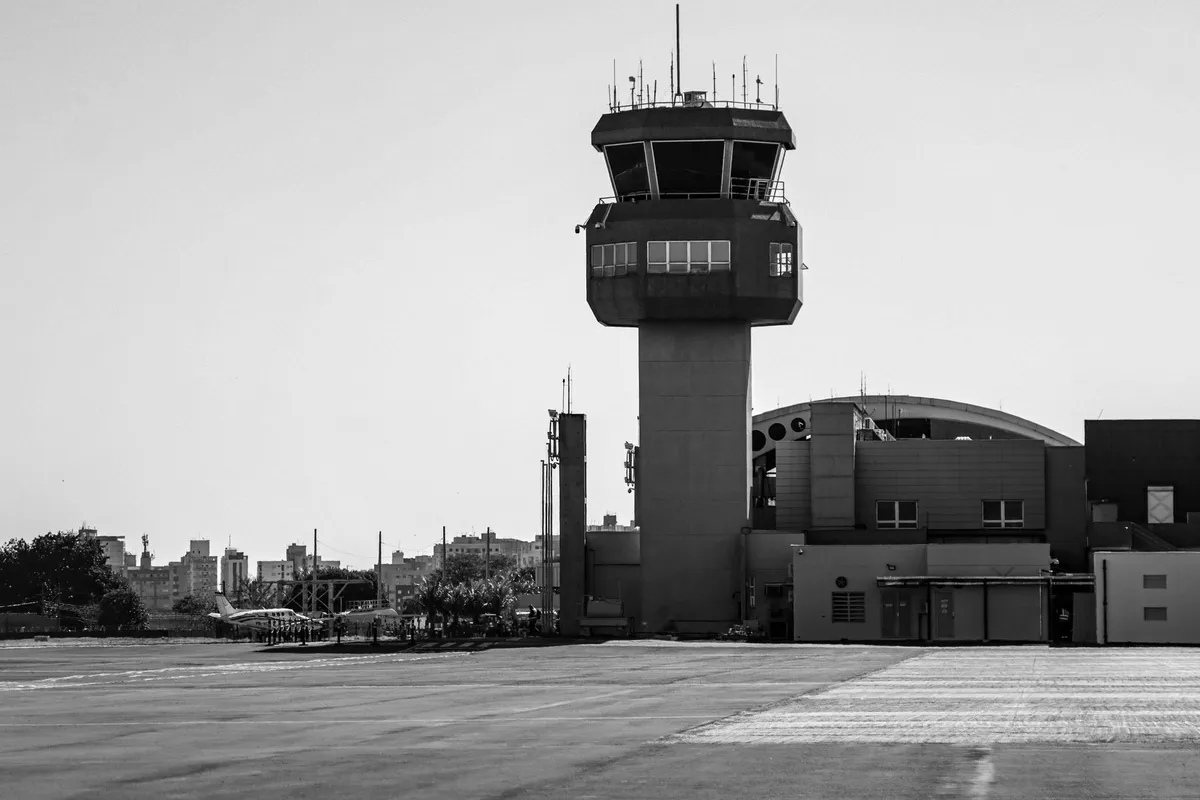
On 22 July 2026 the Civil Aviation Authority of Singapore (CAAS) announced a S$4 billion, 15-year plan for its air navigation services, explicitly calling it a “man-machine-method” upgrade. Eight days later, on 30 July, Thales announced that CAAS had selected it to build the most visible piece of the plan: NexGen ATMS, the new air traffic management system that will replace the current LORADS III by 2030. Read together, the two dates tell a story that anyone buying decision-making AI for critical infrastructure should look at closely: doubling automated capacity and growing the human workforce by 40%, in the same plan.
The machine: more capacity, one supplier
NexGen ATMS, built on Thales’s TopSky – ATC One platform, will need to process up to 4,000 simultaneous aircraft positions in real time — double current capacity — to handle up to a million aircraft movements a year, in one of Asia’s busiest pieces of airspace. Thales’s 30 July press release — not directly reachable due to anti-bot protection on thalesgroup.com, and reconstructed here from citations by trade outlets such as TechNode Global — also describes TopSky – Sequencer, an AI-based tool that optimises arrival and departure flows to cut delays, fuel burn and emissions. Pascale Sourisse, Thales’s Senior Executive Vice-President for International Development, called it “a new chapter in Singapore’s air traffic management”. Neither party has disclosed the contract’s value; the trade publication Aviation Week, behind a paywall, describes it as being in the order of “several million euros” — an indication, not a confirmed figure.
CAAS’s 22 July release lists other tools in the same plan, all presented as support rather than replacement: a Digital ATCO Assistant “to support decision-making and reduce cognitive load”, a tool already developed to automatically detect read-back errors between pilots and controllers, and a digital view of the tower based on cameras and sensors.
The method: one AI planner, not fewer human planners
The third pillar is the Multi Sector Planner: an operational trial, starting in 2027, that will use AI to let a single planner support two or three control sectors instead of just one. It is the same principle as Thales’s Sequencer — the algorithm proposes the sequence, the assignment, the priority; the decision stays with whoever holds the licence.
The workforce: +40%, not -40%
This is the figure that overturns the more common script. CAAS will grow its air traffic controller workforce from around 500 to around 700 by the mid-2030s — nearly 40% more — with an entry salary of around S$64,000 a year, rising to around S$120,000 after five years post-licensing, and a S$20,000 signing bonus, paid in two equal instalments, in effect from 1 June 2026. CAAS Director-General Han Kok Juan said: “As a global air hub, we are committed to serving all airspace users and to deliver for them an even smoother, more seamless and safer travel experience”. The two figures — doubled capacity, growing headcount — are placed side by side in the same release, with no causal link stated between them.
Not just a press release
The principle that “the machine proposes, the human decides” is not only the optimistic reading of a corporate announcement. IFATCA, the international federation of air traffic controllers’ associations, cites an existing policy of its own — AAS 1.20 — that binds anyone selling AI into this sector: “Artificial Intelligence and/or Machine Learning based systems should only be implemented as decision support systems and shall not replace the decision of the ATCO”. A 2025 IFATCA working paper (No. 157, still under discussion, not adopted) adds a warning that reaches beyond aviation: legal liability when a controller follows — or departs from — an AI recommendation remains, by its own admission, a regulatory gap, not a technical detail.
What we could not verify
Thales’s exact contract value is not public. We do not know whether the 30 July award had already been decided when CAAS published the overall plan eight days earlier, or whether the two announcements were staggered for procurement reasons: no source says so, and we are not inventing one. The full text of Thales’s press release was not directly accessible; the technical details cited here come from trade outlets that reproduce it, not from the original text.
The lesson for buyers
First: if you introduce an “AI-assisted” system on infrastructure that is growing faster than its staff, decide and state explicitly whether the automation is tied to workforce plans or not. Ambiguity, not AI, is what generates internal resistance.
Second: every recommendation the system makes — a sequence, a priority, an alert — must be logged alongside the human decision that follows or overrides it. Flight data alone is not enough: when a safety inspection or inquiry arrives, the question is what the machine proposed and what the person decided, and without that trail a policy like AAS 1.20 remains a principle, not evidence.
Third: a system reading radar, flight plans and communications in real time is also a new attack surface. The cybersecurity of the Sequencer or the Digital ATCO Assistant is not a separate chapter: it is the same infrastructure that decides.
How we apply this
CAAS’s problem is not an airport problem: it is the problem of any public-sector body or critical network — energy, ports, healthcare — whose traffic is growing faster than the staff who run it. The control that is needed is not an opinion on the new AI system delivered at switch-on: it is a function that runs permanently on the planner’s and sequencer’s logs, records every proposal and every operator decision, and stays ready for inspection the day someone asks for an account of a sequence — exactly as, in the Destinus-Thales case, the engagement decision had to stay “with the operator”, not with the algorithm.
The same system that keeps the decision logs also holds together, in a single operating model, the data that today stays scattered — flight plans, weather, rosters, maintenance, or their equivalent in a hospital or a power plant — so that the AI proposes and the operator approves, not the other way round. This works on-premise, on autonomous machines that do not require deep integration into the client’s network, or on a dedicated cloud with a data centre in Italy; and it works with shared administration, because a body hiring 200 more controllers does not also need to hire whoever administers the AI system working alongside them.
Anyone deciding on an AI investment for critical infrastructure who wants to know what trail is left after each system recommendation can talk it through in thirty minutes.
Sources
- CAAS — CAAS Upgrades Air Navigation Services Capabilities to Meet Rising Demand for Air Travel (press release, 22 July 2026)
- Thales — Singapore Selects Thales for Next-generation AI-powered Air Traffic Management System (press release, 30 July 2026)
- IFATCA — Working Paper No. 157: ATCO Skills with the Use of Artificial Intelligence and Legal Liability (64th Annual Conference, 2025)